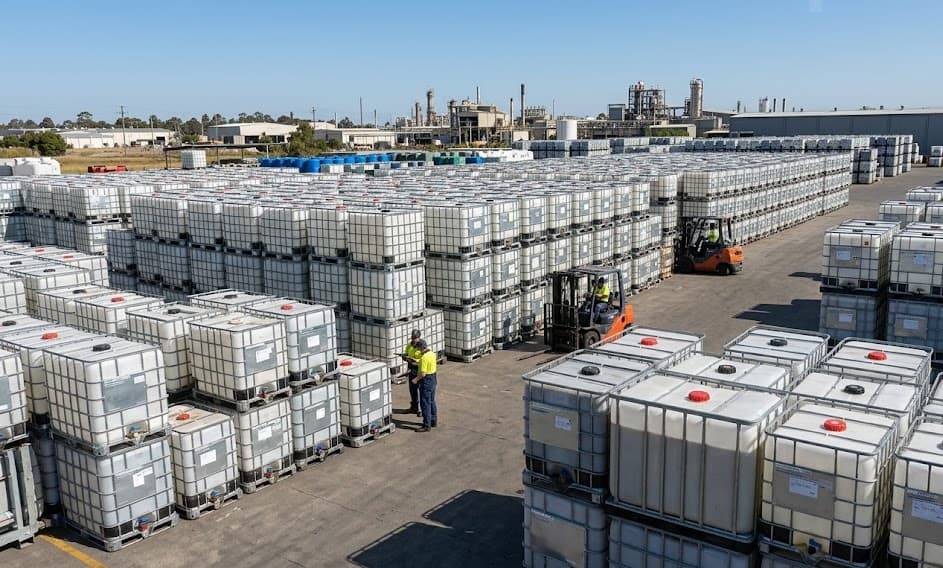
IBC Totes for Agriculture
From fertilizer storage to livestock watering, IBC totes are a workhorse on farms and ranches throughout Northeast Ohio and beyond.
Get a Free Quote
Ohio Agriculture by the Numbers
Ohio is one of the most agriculturally productive states in the nation. With nearly 78,000 farms covering almost 14 million acres, the state produces everything from corn and soybeans to dairy products, poultry, and specialty crops. Northeast Ohio alone is home to over 7,100 farms, many of which rely on IBC totes for daily operations. The demand for affordable, durable bulk liquid containers in agriculture continues to grow as farms seek to reduce costs and improve efficiency.
Farms in Ohio (USDA Census)
Acres of farmland statewide
Annual agricultural output
Ohio ranks first in Swiss cheese production
Farms in the 12-county NE Ohio region
IBC totes in active farm use across Ohio (est.)
Why Farmers Choose IBC Totes
Modern agriculture demands efficient, affordable bulk liquid handling. A single 275-gallon IBC tote replaces five 55-gallon drums while taking up less floor space, requiring fewer trips, and costing significantly less per gallon of storage capacity. The steel cage protects the inner HDPE bottle from impact during transport over rough terrain, and the integrated pallet base means you can move a full tote with any standard forklift or pallet jack. For Ohio farms dealing with unpredictable weather, the ability to stockpile water, fertilizer, and crop protection products on-site in stackable, sealed containers is a genuine operational advantage.
12 Agricultural Applications
IBC totes are one of the most versatile tools on a modern farm. Here are twelve proven applications that farmers throughout Northeast Ohio and beyond rely on every day.
Fertilizer Storage & Transport
Liquid fertilizers such as UAN-28, UAN-32, liquid potash, and ammonium polyphosphate (10-34-0) are commonly stored and transported in IBC totes. The 275-gallon capacity is ideal for field-side application, fitting neatly on a pickup bed or trailer. Reconditioned totes offer a cost-effective way to keep fertilizer on hand without purchasing new containers every season.
Pesticide & Herbicide Handling
Many crop protection chemicals are sold in bulk and transferred to IBC totes for on-farm use. Dedicated containers prevent cross-contamination between different chemical types. We recommend labeling and color-coding your totes by product to maintain strict handling protocols and comply with EPA guidelines.
Irrigation Water Transport
Farms that lack reliable water infrastructure depend on IBC totes to move water to remote fields, greenhouses, and hoop houses. A single 330-gallon tote provides enough water to drip-irrigate a significant plot for days. The integrated valve at the bottom makes gravity-fed distribution simple and efficient.
Livestock Watering
Cattle, horses, goats, and poultry all need consistent access to clean water. IBC totes can be elevated on pallets and gravity-fed into troughs, eliminating the need for pumps or electricity in remote pastures. Their UV-resistant cages protect the inner bottle from sun damage, extending service life outdoors.
Maple Syrup Collection
Northeast Ohio is prime maple country. During tapping season, producers use IBC totes to collect and consolidate sap from multiple trees before transport to the sugar shack. The wide top opening allows easy pouring, and the bottom valve simplifies transfer into evaporators.
Aquaponics & Hydroponics
IBC totes have become the container of choice for DIY aquaponic and hydroponic systems. The tote can be cut to create both a fish tank and grow bed from a single unit. Repurposed totes from Cleveland IBC Recycling are an affordable foundation for these sustainable growing systems.
Rainwater Harvesting
Farmers and homesteaders throughout Ohio use IBC totes to capture rainwater from barn roofs, equipment sheds, and greenhouse gutters. A single 275-gallon tote connected to a standard downspout can fill from a moderate rainfall event on a 400-square-foot roof section. The stored water can then gravity-feed into drip irrigation lines, garden beds, or livestock troughs, reducing municipal water costs and providing a drought buffer.
Compost Tea Brewing
Organic farms and market gardens brew compost tea in IBC totes fitted with aeration pumps. The large volume allows batch production of biologically active liquid fertilizer. The bottom-discharge valve makes it easy to drain the finished tea into sprayers for foliar application or soil drenching.
Liquid Feed Supplements
Cattle operations use IBC totes to store and dispense liquid molasses-based feed supplements, mineral supplements, and liquid protein feeds. The bottom valve connects directly to lick-wheel feeders or gravity-flow dispensers positioned in pastures and feedlots.
Seed Treatment & Coating
Seed treatment chemicals, inoculants, and coating agents for corn, soybean, and wheat seeds are received and stored in IBC totes. The sealed container protects these sensitive biological and chemical products from temperature extremes and contamination during storage.
Fish Transport & Aquaculture
Small-scale aquaculture operations and fish stocking services use IBC totes to transport live fish. The tote provides a contained, aerated environment for short-distance transport of fingerlings, trout, catfish, and other species. Clean, food-grade totes are recommended for this application.
Greenhouse Climate Control
Greenhouse operators use IBC totes filled with water as thermal mass to moderate temperature swings. During the day, the water absorbs excess heat; at night, it releases stored warmth to protect plants from frost. Painted black, a row of totes along the north wall of a greenhouse provides significant passive heating during Ohio winters.
Seasonal Usage Patterns
Agricultural IBC tote usage follows distinct seasonal patterns in Ohio. Understanding these cycles helps farmers plan their inventory needs and take advantage of off-season pricing.
Spring (March - May)
Highest demand period. Fertilizer mixing and application, pesticide preparation, irrigation system setup, seed treatment, and greenhouse planting drive bulk purchases of totes. Many farms replenish their entire tote inventory during this window.
Pro Tip: Order early. Spring demand spikes drive tote inventory turnover faster than any other season. Contact us in February to reserve your spring supply.
Summer (June - August)
Irrigation water transport peaks during dry spells. Livestock watering demand remains constant. Compost tea production and foliar feeding programs are in full swing. Pesticide and fungicide applications continue for row crops and orchards.
Pro Tip: Keep totes out of direct, prolonged sunlight when possible. While HDPE resists UV degradation, shaded storage extends bottle life significantly.
Fall (September - November)
Post-harvest chemical applications, fall fertilizer spreading, and rainwater collection ramp up. Maple syrup producers begin preparing collection equipment. Many farms sell back or trade in used totes they no longer need.
Pro Tip: We buy back used totes. If you have containers you no longer need after harvest, contact us for pickup. We pay competitive prices for clean, intact totes.
Winter (December - February)
Livestock watering remains critical. Heating blankets keep liquid fertilizer and feed supplements from freezing. Greenhouse thermal-mass totes provide passive heating. Planning and ordering for the coming spring season begins.
Pro Tip: Heating blankets and insulated covers prevent freeze damage to totes stored outdoors. We carry both in our accessories department.
Water Management Guide
Water is the most common substance stored in agricultural IBC totes. Whether you are irrigating crops, watering livestock, or harvesting rainwater, these practical guides will help you get the most out of your tote-based water systems.
Gravity-Fed Drip Irrigation
Elevate an IBC tote on a sturdy platform (cinder blocks or a reinforced wooden stand) at least 3-4 feet above your garden bed. Connect a standard garden hose adapter to the 2-inch butterfly valve, then run drip tape or soaker hose to your rows. At 4 feet of elevation, you will get approximately 1.7 PSI of water pressure, enough for low-pressure drip systems that cover up to 200 linear feet of row.
Rainwater Collection System
Position your IBC tote beneath a gutter downspout from a barn or shed roof. Install a first-flush diverter to keep the initial dirty runoff out of your tote. Add a fine mesh screen over the top opening to prevent debris and mosquito breeding. A 1,000-square-foot roof section generates approximately 620 gallons of water per inch of rainfall, enough to fill two 275-gallon totes from a single moderate rain event.
Frost Protection
Water stored in IBC totes can freeze during Ohio winters, potentially cracking the HDPE bottle. Prevent freeze damage by draining totes to 80% capacity (allowing expansion room), wrapping with insulated tote blankets, or using electric heating blankets designed for IBC containers. For totes that will remain outdoors and full through winter, a thermostatically controlled heating blanket is the most reliable solution.
Multi-Tote Manifold Systems
Connect multiple IBC totes together using a manifold system with the bottom discharge valves. This creates a larger reservoir without requiring a single massive tank. Three totes connected in series provide 825-990 gallons of storage capacity. Use ball valves at each connection point so individual totes can be isolated for cleaning or replacement without draining the entire system.
Pesticide Container Regulations
Farmers who use IBC totes for pesticide and herbicide storage must comply with EPA and Ohio Department of Agriculture regulations. Non-compliance can result in significant fines and environmental liability. Here are the key requirements every Ohio farmer should know.
Triple-Rinse Requirement
EPA requires that pesticide containers be triple-rinsed before disposal or recycling. Each rinse should use a volume equal to 10-20% of the container capacity. The rinsate must be added to the spray tank and applied according to label directions, never poured on the ground or into drains.
Container Management
Under EPA FIFRA regulations, refillable pesticide containers must meet DOT standards for transport, be properly labeled with the registered product label, and be cleaned according to the manufacturer instructions between refills. Records of cleaning and refilling must be maintained.
Cross-Contamination Prevention
Never use a container that held one pesticide to store a different pesticide without proper decontamination. Residues from the previous product can alter the efficacy or safety profile of the new product. Dedicated containers for each product type are strongly recommended.
Storage Requirements
Ohio law requires that pesticide storage areas have secondary containment, adequate ventilation, and be secured against unauthorized access. IBC totes containing pesticides should be stored on spill containment pallets and away from water sources, feed storage, and living quarters.
Record Keeping
Farms must maintain records of pesticide purchases, applications, and container disposal for a minimum of 3 years. This includes tracking which containers held which products and how empty containers were managed (triple-rinsed, returned, recycled, or disposed).
Cost Savings for Farms
The economics of IBC totes are compelling for agricultural operations of any size. The chart below compares the cost of storing 275 gallons of liquid across different container options. Used IBC totes from Cleveland IBC Recycling offer the lowest per-gallon storage cost available.
| Container Type | Unit Cost | Cost per 275 Gal | Savings |
|---|---|---|---|
| 55-gallon drum (new) | $65-85 | $325-425 (5 drums) | Baseline |
| New IBC tote (275 gal) | $300-400 | $300-400 | Save 0-20% |
| Reconditioned IBC tote | $150-225 | $150-225 | Save 45-65% |
| Used IBC tote | $75-150 | $75-150 | Save 60-80% |
Annual Savings Example
A mid-size Ohio farm using 2,750 gallons of liquid fertilizer per season would need 10 IBC totes or 50 drums. At used IBC tote pricing ($100 average), the total container cost is approximately $1,000. The same volume in new 55-gallon drums would cost $3,750. That is a savings of $2,750 per year on containers alone, before accounting for the additional labor savings from fewer handling events, reduced spillage, and easier storage management.
Key Benefits for Farmers
Massive Cost Savings
Used IBC totes cost a fraction of new containers. For non-critical applications like water transport and fertilizer storage, a quality used tote performs identically to a new one at 40-60% less cost.
Durable in Field Conditions
The galvanized steel cage absorbs impacts from equipment bumps, rough roads, and stacking. HDPE inner bottles resist UV degradation and are compatible with most agricultural chemicals.
Easy to Transport
IBC totes fit on standard pallets, pickup truck beds, flatbed trailers, and hay wagons. The integrated pallet base eliminates the need for separate skids.
Gravity-Fed Dispensing
The bottom-mounted 2-inch butterfly valve allows controlled gravity flow into sprayers, troughs, drip lines, and mixing tanks without pumps or siphons.
Stackable Storage
Stack up to two totes high (when properly supported) to double your storage capacity in the same footprint. Ideal for barns and outbuildings with limited space.
Environmentally Responsible
Choosing recycled or reconditioned totes keeps plastic out of landfills. When a tote finally reaches end of life, Cleveland IBC Recycling will take it back for responsible recycling.
Chemical Compatibility
HDPE inner bottles are compatible with a wide range of agricultural chemicals including most fertilizers, herbicides, insecticides, and adjuvants. Always verify compatibility for concentrated or specialty products.
Year-Round Versatility
From spring planting through winter livestock care, IBC totes serve a different purpose every season. A tote used for fertilizer in spring can be cleaned and used for water storage in summer.
Recommended Products
Cleveland IBC Recycling carries a full range of IBC totes and accessories suited for agricultural applications. Here is a guide to help you choose the right product for your farm.
Ready to Stock Your Farm?
Whether you need a single tote for your backyard garden or a truckload for a commercial operation, Cleveland IBC Recycling has the inventory and the expertise to help. Contact us for pricing, availability, and free delivery estimates throughout Northeast Ohio.
We offer volume discounts for orders of 5 or more totes, and we provide free pickup of your old, damaged, or unwanted IBC containers. Farmers who buy and sell with us regularly receive priority pricing and first access to our freshest reconditioned inventory.