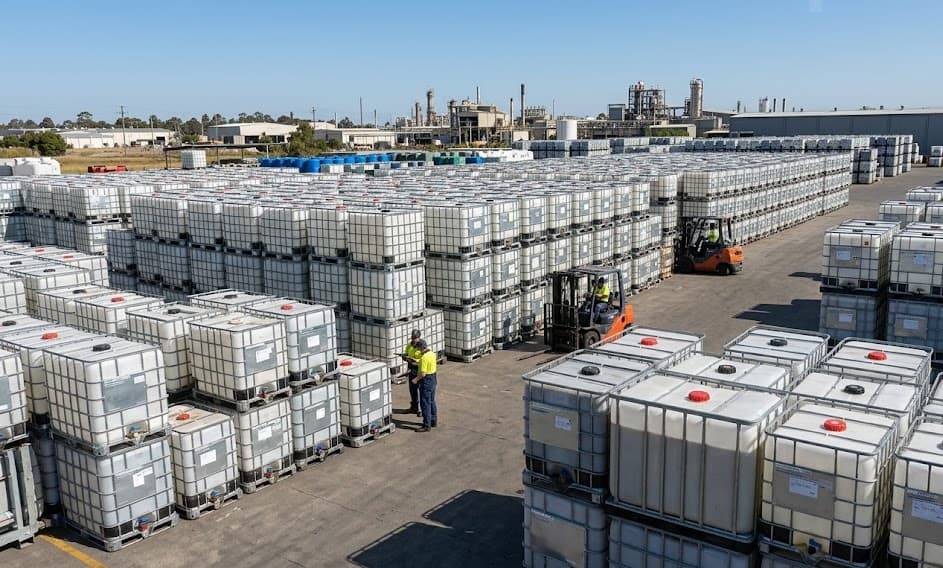
IBC Tote Recycling & Responsible Disposal
Every IBC tote we process is diverted from the landfill. Our zero-waste approach recovers HDPE plastic, steel, and aluminum � turning end-of-life containers into valuable raw materials.
Get a Free Quote
Our Promise
Zero Totes to Landfill
A single IBC tote thrown into a landfill occupies roughly 48 cubic feet of space and takes centuries to decompose. The steel cage rusts, leaching metals into groundwater. The HDPE bottle breaks into microplastics that persist in the environment indefinitely. Multiply that by the thousands of totes discarded across Ohio every year, and the scale of the problem becomes staggering.
Cleveland IBC Recycling exists to break that cycle. Since our founding, we have maintained a strict zero-landfill policy. Every container that enters our facility leaves as either a reconditioned, ready-to-use tote or as sorted, processed raw material bound for manufacturers who give it a second life. We track diversion rates across every batch and publish annual sustainability metrics, because accountability drives real progress.
Our zero-landfill commitment is not aspirational � it is operational. We have engineered our entire workflow around material recovery. When a tote is too damaged for reconditioning, it enters our disassembly line where every gram of HDPE, steel, and aluminum is captured and channeled into the appropriate recycling stream. Even gaskets, labels, and residual contents are managed through proper disposal channels rather than landfill disposal.
Diversion Rate
Zero waste to landfill
Material Streams
HDPE, steel, aluminum
Energy Saved
Recycled vs. virgin steel
The Process
Complete 10-Step Recycling Process
Every IBC tote that enters our recycling line follows a documented, ten-stage workflow designed to maximize material recovery, ensure regulatory compliance, and provide full traceability from intake to output.
Collection & Logistics Coordination
Used IBC totes arrive at our facility via our own fleet or customer drop-off. Before pickup, our logistics team confirms quantities, assesses site access requirements, and dispatches the right-sized vehicle. Each inbound shipment is pre-assigned a batch number for tracking through every subsequent stage of the recycling workflow.
Intake Logging & Photography
Every container is logged into our tracking system upon arrival. Technicians record the manufacturer, date code, approximate age, visible condition, and any labeling that indicates prior contents. Each tote is photographed from multiple angles. This documentation creates an auditable intake record that follows the container through processing and appears on your Certificate of Recycling.
Hazardous Residue Screening
Before disassembly, each tote undergoes a residue screening. Technicians check for chemical odors, visible residue films, hazard labels, and UN markings. Containers flagged for hazardous residue are quarantined and routed through our specialized decontamination protocol. Only after passing this screening does a tote proceed to the standard recycling line.
Assessment & Diversion Decision
Technicians inspect every tote to determine whether it qualifies for reconditioning or must proceed to full recycling. Containers with intact bottles, straight cages, and functional valves are diverted to our cleaning line for a second life. Those with irreparable damage, chemical contamination, or structural failure are marked for full material recovery. This step maximizes reuse before recycling.
Disassembly & Component Separation
The HDPE bottle is separated from the steel cage and pallet. Valves, gaskets, caps, and fittings are removed and sorted by material type � ferrous metals in one bin, non-ferrous in another, rubber and plastic gaskets in a third. The pallet base is assessed and either repaired for reuse or broken down for material recovery. Nothing is discarded � every component enters a recovery stream.
HDPE Shredding & Washing
Recovered HDPE bottles are fed through an industrial shredder that reduces them to uniform flake. The flake then enters a washing system that removes adhesive residue, ink, labels, and surface contamination. Multiple rinse stages and a float-sink separation tank eliminate non-plastic contaminants. Clean flake is dried and either pelletized on-site or shipped as washed regrind to downstream processors.
Steel Cutting & Baling
Steel cages are cut into manageable sections using hydraulic shears. Cut steel is sorted by grade � galvanized versus non-galvanized � and compressed in a horizontal baler into dense bales weighing approximately 1,000 pounds each. Baled steel is staged for transport to regional steel mills, where it will be melted and recast into new products.
Non-Ferrous Metal Recovery
Aluminum valves, brass fittings, and other non-ferrous components are collected, cleaned of any attached plastic or rubber, and sorted using eddy current separation. These metals are weighed, documented, and sold to specialty recyclers who process them through smelting operations. Non-ferrous recovery adds meaningful value to the recycling equation despite representing a smaller percentage of total tote weight.
Quality Verification & Contamination Testing
Processed materials undergo quality checks before release. HDPE flake is tested for melt flow index, contamination level, and color consistency. Steel bales are weighed and graded. Non-ferrous metals are verified for purity. Any batch that fails our quality threshold is reprocessed rather than shipped. These controls ensure our downstream buyers receive material that meets their manufacturing specifications.
Documentation, Certification & Reporting
You receive a Certificate of Recycling confirming the quantity processed, materials recovered, diversion rate achieved, and the date of processing. This documentation supports your sustainability reporting, waste audits, EPA compliance records, and corporate ESG disclosures. For bulk accounts, we provide quarterly summary reports with cumulative metrics and year-over-year comparisons.
Materials Recovery
What We Recover
An IBC tote is not a single material � it is a composite of valuable resources. We separate and process each one to maximize recovery value and minimize environmental impact. Our recovery rates rank among the highest in the industry.
HDPE Plastic
The inner bottle of every IBC tote is made from high-density polyethylene, one of the most recyclable plastics on the planet. We shred, wash, and pelletize recovered HDPE, which is then sold to manufacturers who turn it into new bottles, pipes, lumber alternatives, and industrial containers.
End uses: New containers, plastic lumber, drainage pipes, industrial bins, agricultural film
Steel Caging
The galvanized steel cage that protects the HDPE bottle is cut, sorted, and baled for delivery to regional steel mills. Recycled steel requires 74% less energy to produce than virgin steel, making this one of the highest-impact recovery steps in our process.
End uses: Structural steel, automotive components, appliances, new caging, rebar
Aluminum & Valves
Valves, fittings, and pallet hardware contain aluminum and other non-ferrous metals. These components are separated, cleaned, and channeled into metal recycling streams where they are melted down and recast into new products.
End uses: New valve assemblies, aluminum extrusions, castings, electrical components
Impact
Environmental Impact Per Tote
Every IBC tote we recycle generates measurable environmental benefits. Here is what a single tote contributes to resource conservation when it goes through our process instead of a landfill.
1 IBC Tote Recycled
of HDPE plastic diverted from landfill and returned to the manufacturing stream as usable raw material
Steel Recovery Per Tote
of galvanized steel reclaimed, saving 74% of the energy required to produce equivalent virgin steel
Carbon Offset Per Tote
equivalent greenhouse gas emissions avoided compared to landfilling and producing virgin replacement materials
Water Saved Per Tote
of water conserved versus manufacturing new HDPE resin and steel from raw ore extraction processes
Landfill Space Saved
per tote diverted � preventing centuries of decomposition and potential groundwater contamination
Energy Saved Per Tote
total energy conserved across all material streams compared to virgin production pathways
Cumulative Impact at Scale
The per-tote numbers above multiply quickly for businesses that process hundreds or thousands of containers annually. Here is what that looks like at common volume levels.
100 totes/year
- ✓ 3.25 tons HDPE
- ✓ 6 tons CO2 avoided
- ✓ 2 tons steel reclaimed
500 totes/year
- ✓ 16.25 tons HDPE
- ✓ 30 tons CO2 avoided
- ✓ 10 tons steel reclaimed
1,000 totes/year
- ✓ 32.5 tons HDPE
- ✓ 60 tons CO2 avoided
- ✓ 20 tons steel reclaimed
Special Handling
Hazardous Material Procedures
Not every IBC tote held benign contents. When totes arrive with hazardous residues, we follow a strict protocol that protects workers, the environment, and your regulatory standing.
Identification & Quarantine
Totes arriving with hazardous material labels, UN identification numbers, or detectable chemical odors are immediately quarantined in a separate, bermed staging area. They do not enter the standard processing line until they have been assessed and cleared by a trained hazmat technician.
Residue Classification
Our technician reviews the Safety Data Sheet (SDS) for the previously held substance, determines the residue category under RCRA (characteristic or listed hazardous waste), and establishes the appropriate handling protocol. If the SDS is unavailable, we perform field testing to classify the residue.
Decontamination
Hazardous residues are drained, captured in DOT-approved containers, and manifested for transport to a licensed Treatment, Storage, and Disposal Facility (TSDF). The tote is then triple-rinsed per EPA guidance, and rinse water is tested before discharge to our wastewater treatment system. Only after confirmed decontamination does the tote proceed to recycling.
Manifest & Chain of Custody
Every hazardous waste removal generates a Uniform Hazardous Waste Manifest (EPA Form 8700-22). We retain generator copies, transporter copies, and TSDF confirmation copies for a minimum of five years. These records ensure an unbroken chain of custody from your facility to final disposition and protect you during regulatory audits.
Emergency Response Protocol
In the event of a spill or release during intake or processing, our facility maintains a Spill Prevention, Control, and Countermeasure (SPCC) plan. Spill kits, absorbent materials, and secondary containment are staged throughout the processing area. All employees are trained in initial spill response, and we maintain relationships with licensed environmental remediation contractors for incidents beyond our in-house capacity.
Compliance
Regulatory Compliance
Our recycling operations are built on a foundation of regulatory compliance. We do not just meet the minimum requirements � we build processes that exceed them, because environmental responsibility demands more than checking boxes.
Ohio EPA Compliance
Our operations meet or exceed all Ohio Environmental Protection Agency requirements for solid waste processing and materials recovery. We hold a valid Ohio EPA solid waste facility license and submit annual facility reports documenting throughput, diversion rates, and environmental controls. Our facility is subject to unannounced inspections, and we maintain a clean compliance record.
Federal EPA Standards
We comply with all applicable federal Environmental Protection Agency regulations governing the handling, storage, and processing of non-hazardous solid waste. Our wastewater discharge, air emissions, and stormwater management practices are designed to meet or exceed federal minimums. We participate in EPA voluntary programs that promote pollution prevention and materials recovery.
RCRA Standards
We follow Resource Conservation and Recovery Act guidelines for the handling, storage, and processing of containers that held regulated substances. RCRA defines the framework for managing hazardous and non-hazardous solid waste from generation to disposal. Our staff is trained in RCRA requirements for container management, and we maintain documentation that demonstrates compliance at every processing stage.
DOT Packaging Rules
Totes that previously carried hazardous materials are processed in accordance with Department of Transportation packaging and residue management standards. DOT 49 CFR regulations govern how residue containers must be handled, labeled, and transported. Our drivers and technicians hold current DOT hazmat training certifications, and every shipment involving former hazmat containers includes proper shipping papers.
ISO 14001 Principles
Our environmental management practices align with ISO 14001 principles, including continual improvement targets for waste reduction and energy efficiency. We set annual objectives for reducing water consumption per tote processed, increasing material recovery rates, and lowering our carbon footprint per ton of material handled. These targets are reviewed quarterly by our operations team.
OSHA Workplace Safety
Our facility operates under a comprehensive safety program that meets OSHA requirements for materials handling, chemical exposure, machine guarding, and personal protective equipment. Employees complete initial safety training and ongoing refresher courses. We conduct monthly safety audits and maintain a recordable incident rate well below the industry average for waste processing facilities.
Documentation
Documentation & Chain of Custody
Proper documentation transforms recycling from a handshake arrangement into a verifiable, auditable process. Every tote that enters our facility generates a paper trail that protects your business during audits, regulatory reviews, and sustainability reporting.
Certificate of Recycling
Formal certificate confirming the number of totes processed, date of processing, materials recovered, and diversion rate achieved. Suitable for waste audits, sustainability reports, and corporate disclosures.
Pickup Receipt
Signed document listing every container removed from your site, including count, assessed condition, and date of pickup. Serves as your proof of proper transfer for regulatory purposes.
Bill of Lading
Transportation record accompanying every shipment. Documents the quantity, origin, destination, and handling instructions for totes in transit between your facility and ours.
Chain of Custody Log
Detailed tracking record showing every handler, process step, and timestamp from intake to final material release. Required for clients with strict waste management audit requirements.
Hazardous Waste Manifest
EPA Form 8700-22 generated for any tote that contained hazardous materials. Tracks the waste from generator to transporter to licensed TSDF. Copies retained for minimum five years.
Quarterly Sustainability Report
Available for bulk and enterprise accounts. Summarizes cumulative totes processed, total material recovered by type, equivalent carbon offsets, and year-over-year performance trends.
Photo Documentation
Intake photographs of every tote received, documenting pre-processing condition. Available upon request for clients who need visual records for insurance or compliance purposes.
Material Recovery Summary
Breakdown of recovered material by weight and type for each batch processed. Useful for clients who track material flow as part of circular economy or zero-waste programs.
Who We Serve
Industries We Recycle For
IBC totes reach end of life across every sector that uses bulk liquid containers. Here are the industries that rely on our recycling services most frequently and the unique considerations each one presents.
Food & Beverage Manufacturing
Food plants generate a high volume of totes that cycle through quickly. Many are candidates for reconditioning rather than recycling, so our diversion-first approach maximizes reuse before end-of-life processing. Totes that cannot be recertified for food contact are recycled with full documentation for FSMA compliance.
Chemical Production & Distribution
Chemical totes often carry residues that require specialized handling before recycling. Our hazmat-trained team classifies residues, decontaminates containers per RCRA guidelines, and processes the materials with full manifest and chain-of-custody documentation for regulatory protection.
Pharmaceutical & Biotech
Pharmaceutical totes may contain API residues or controlled substance traces. We work with your quality team to develop a recycling protocol that satisfies DEA destruction requirements (where applicable) and provides the documentation your regulatory affairs department needs.
Agriculture & Irrigation
Agricultural operations accumulate totes from fertilizer, pesticide, and nutrient concentrate deliveries. Many of these containers are stored outdoors and weather-damaged by the time they are ready for disposal. Our recycling process handles weather-degraded HDPE without issue.
Water Treatment Facilities
Municipal and industrial water treatment plants use totes for coagulants, pH adjusters, and disinfectants. We provide scheduled recycling pickups aligned with chemical delivery schedules so empty totes are removed as new ones arrive.
Automotive & Metal Finishing
Coolants, lubricants, degreasers, and plating chemicals leave challenging residues in IBC totes. Our decontamination procedures address these specific chemistries, and we provide the waste manifests needed for your environmental compliance files.
Printing & Coatings
Ink, resin, and coating manufacturers generate totes with hardened residues that are difficult to clean. When reconditioning is not viable, our recycling team shreds and processes these containers, recovering clean HDPE flake from even heavily contaminated bottles through our multi-stage wash system.
Cannabis & Hemp Processing
Extraction solvents, nutrient solutions, and finished product containers must be disposed of in compliance with state cannabis regulations. We provide documentation that satisfies state tracking requirements and ensures proper chain of custody from your facility to final material recovery.
Construction & Building Materials
Concrete admixtures, sealants, and form release agents leave thick residues that make reconditioning impractical. These totes go directly to our recycling line where the HDPE is mechanically separated from the residue during the shredding and washing process.
Material Flow
Material Separation Breakdown
Every IBC tote is a composite of distinct materials that require different processing pathways. Here is a detailed look at how each component is separated, processed, and channeled to its optimal recovery stream.
HDPE Bottle (Inner Container)
55-65 lbs per toteThe polyethylene bottle is removed from the cage, drained of any residual contents, and fed through our industrial shredder. The resulting flake is washed in a multi-stage system that removes labels, adhesive, ink, and surface contamination. A float-sink separation tank isolates HDPE flake from heavier contaminants. Clean flake is centrifuged to remove excess water, dried in a hot-air tumbler, and either pelletized on-site or packaged as washed regrind for sale to downstream processors.
Output specification: Clean HDPE flake or pellet, less than 50 ppm contamination, consistent color sort, melt flow index certified
Galvanized Steel Cage
35-45 lbs per toteThe steel cage is cut into sections using hydraulic shears. Cut pieces are sorted by grade � standard galvanized versus heavy-gauge or stainless-steel variants. Sorted steel is compressed in a horizontal baler into dense bales averaging 1,000 pounds. Baled steel is staged on pallets and shipped to regional steel mills within 30 days of processing.
Output specification: #1 heavy melt steel or galvanized bales, maximum 5% attachment by weight, bale weight 800-1,200 lbs
Valves, Fittings & Hardware
3-8 lbs per toteButterfly valves, camlock fittings, caps, and gaskets are removed manually during disassembly. Metal components (aluminum, brass, stainless) are cleaned of attached plastic or rubber and sorted using eddy current separation. Rubber gaskets and plastic dust caps are collected separately and channeled to appropriate recycling or energy recovery streams.
Output specification: Sorted non-ferrous metals by type, minimum 95% purity, bulk packed for smelter delivery
Pallet Base
15-25 lbs per tote (varies by material)Steel pallets are cut and added to the steel baling stream. Plastic (HDPE or composite) pallets are assessed for reuse � intact pallets are cleaned and paired with rebottled totes. Damaged plastic pallets are shredded and processed alongside the bottle material. Wood pallets (rare in IBC totes but occasionally present) are chipped for landscape mulch or biomass fuel.
Output specification: Material-specific: steel joins bale stream, plastic joins HDPE flake stream, wood becomes landscape chips
Labels, Adhesives & Residual Coatings
Less than 1 lb per totePaper and plastic labels are removed during the shredding and washing stages. Adhesive residue dissolves in the hot wash water and is captured by our wastewater treatment system. Any residual coatings on the HDPE surface are removed during the alkaline wash cycle. These trace materials represent less than 1% of tote weight but are important to manage for downstream material quality.
Output specification: Captured in wastewater treatment � no separate material output
The Right Choice
Recycling vs. Landfill
The numbers speak for themselves. Here is what happens when an IBC tote goes to the landfill versus when it enters our recycling process.
Material Recovery
Landfill Disposal
Zero � all materials are buried and lost permanently
Cleveland IBC Recycling
99%+ of HDPE, steel, and aluminum recovered and returned to manufacturing
Decomposition Time
Landfill Disposal
400+ years for HDPE to break down; steel rusts over decades leaching metals
Cleveland IBC Recycling
Materials reprocessed within 30 days of intake and back in manufacturing supply chain
Carbon Footprint
Landfill Disposal
Methane generation from organic contamination; no offset from material recovery
Cleveland IBC Recycling
~120 lbs CO2 equivalent avoided per tote through material substitution
Water Impact
Landfill Disposal
Leachate carries chemical residues and microplastics into groundwater systems
Cleveland IBC Recycling
Process water treated on-site and discharged per NPDES permit � zero groundwater impact
Regulatory Risk
Landfill Disposal
Potential liability if residues are later classified as hazardous; no documentation trail
Cleveland IBC Recycling
Full chain of custody, Certificate of Recycling, and manifest documentation for audit protection
Cost to Your Business
Landfill Disposal
Disposal fees plus potential future environmental liability
Cleveland IBC Recycling
Often free for qualifying volumes; reusable totes may generate buyback revenue
Common Questions
Recycling FAQ
Do you charge for IBC tote recycling?
For standard non-hazardous totes in our primary service area, recycling pickup is free when you have 10 or more containers. For smaller quantities or totes with hazardous residues, a processing fee may apply. We always provide a clear quote before scheduling.
What happens to the recycled materials?
HDPE plastic is shredded, washed, and pelletized for sale to manufacturers of new plastic products. Steel caging is baled and sold to regional steel mills. Aluminum and non-ferrous metals are sorted and sent to metal recyclers. Every material stream has a verified downstream buyer.
Can you recycle IBC totes that held hazardous materials?
Yes. Totes with hazardous residues are processed through our specialized decontamination protocol. Residues are manifested and sent to licensed TSDFs. The decontaminated tote then enters our standard recycling line. Additional fees apply for hazmat handling and manifesting.
How quickly do you issue a Certificate of Recycling?
Standard certificates are issued within 48 hours of processing. Rush same-day certificates are available on request. Certificates are sent via email in PDF format and are stored in our system for a minimum of five years for your retrieval.
Do you offer recycling for non-IBC containers?
Our primary focus is IBC totes (275-gallon and 330-gallon). However, we also accept HDPE drums (15-55 gallon), poly tanks, and steel drums in some cases. Contact us with details about the containers you need recycled and we will confirm eligibility.
What is your minimum quantity for free pickup?
Within our primary service zone (50 miles of Cleveland), free recycling pickup requires a minimum of 10 IBC totes. In our extended service area, the minimum is 25 totes. Below these thresholds, a flat pickup fee applies.
Can I drop off totes at your facility instead?
Absolutely. Our Cleveland yard accepts drop-offs Monday through Friday, 7 AM to 4 PM. No appointment needed for quantities under 20 totes. For larger deliveries, we ask that you call ahead so we can stage dock space for efficient unloading.
How do you track my totes through the recycling process?
Every tote is assigned a batch number at intake and tracked through each processing stage in our system. Your Certificate of Recycling references this batch number, and we can provide a detailed processing timeline for any batch on request.
Why Cleveland IBC
Why Choose Us for IBC Recycling
True Zero-Landfill Operation
We do not just claim zero waste � we measure it. Every material stream is weighed, documented, and verified against intake records. Our 100% diversion rate is audited annually and published in our sustainability report.
Full In-House Processing
Unlike brokers who collect totes and ship them elsewhere, we process every container at our own Cleveland facility. You know exactly where your totes are and what happens to them � no third-party black boxes.
Certified Documentation
Every recycling job generates a Certificate of Recycling with batch tracking, material weights, and diversion metrics. This is audit-grade documentation, not a generic receipt.
Hazmat Capability
Many recyclers refuse containers with chemical residues. We have the training, equipment, and permits to handle hazardous residue containers through our specialized decontamination protocol.
Free Pickup on Qualifying Orders
For 10 or more non-hazardous totes within 50 miles of Cleveland, pickup is free. We absorb the transportation cost because efficient recycling depends on volume, and we want to make it easy for you to do the right thing.
Diversion-First Philosophy
Before any tote reaches our shredder, it is assessed for reconditioning potential. Containers that can serve another lifecycle are diverted to our cleaning line. This extends the useful life of the product and maximizes the environmental benefit of every tote we touch.
Recycle Responsibly with Cleveland IBC
Stop sending IBC totes to the landfill. Partner with us for certified, zero-waste recycling that protects the environment and supports your sustainability goals.
Schedule a Recycling Pickup