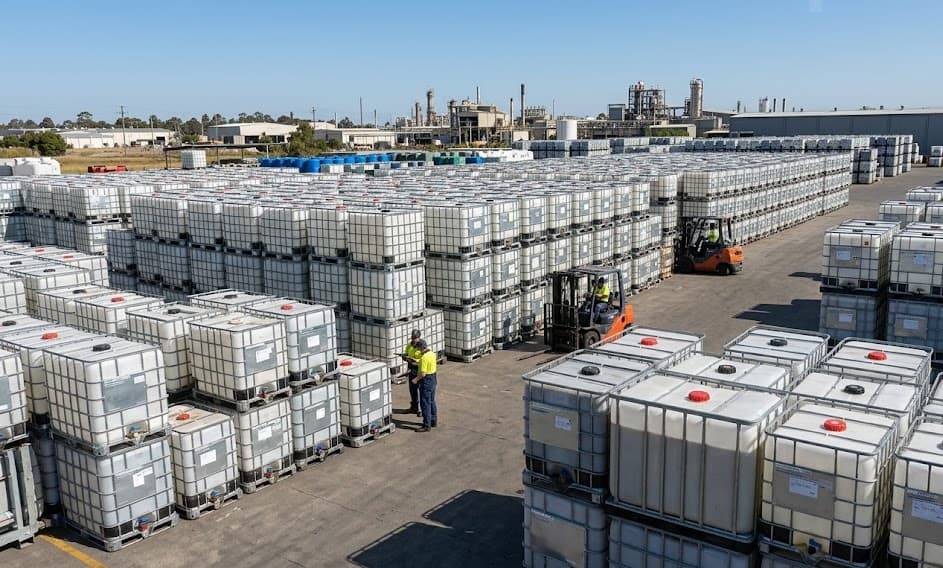
Repurposed IBC Products
Creative, sustainable solutions made from upcycled IBC totes. Every repurposed tote is a container saved from the waste stream � and a project waiting to happen.
Order Repurposed Products
Why Repurpose IBC Totes?
Every year, millions of IBC totes reach the end of their industrial service life. Rather than sending these durable, high-quality containers to landfills, repurposing gives them a second purpose while saving you money. HDPE plastic lasts decades in outdoor conditions, making repurposed IBC products a long-lasting, eco-friendly choice for home, garden, and farm.
The beauty of an IBC tote is its construction. The HDPE bottle is food-grade safe, UV-resistant, and virtually indestructible under normal conditions. The steel cage provides structure and protection. The integrated pallet makes the whole unit movable with a forklift, hand truck, or furniture dolly. That combination of durability, capacity, and portability makes IBC totes the ideal raw material for dozens of creative projects.
Whether you are building a backyard rain barrel, launching a school aquaponics program, or setting up emergency water storage for your community, we have the totes, the expertise, and the modifications to make your project a success.
Repurposed Product Catalog
Rain Barrels
Converted IBC totes make excellent high-capacity rain barrels. With 275 gallons of storage, one unit captures enough rainwater to sustain a large garden through weeks of dry weather. Each barrel comes with a screened inlet to filter debris, a spigot for easy hose connection, and an overflow port. The steel cage protects the barrel from accidental damage, and the UV-resistant HDPE bottle withstands years of outdoor exposure.
How It Works
We cut a rectangular opening in the top of the IBC bottle and install a fine-mesh stainless steel screen to filter leaves, insects, and roof debris. A standard garden hose adapter is installed on the existing bottom valve for easy dispensing. An overflow port near the top diverts excess water away from your foundation during heavy rain. The original cage and pallet remain intact so the barrel can be moved with a hand truck or forklift.
Features
- 275-gallon capacity
- UV-resistant HDPE bottle
- Screened inlet filters debris
- Spigot with garden hose adapter
- Overflow port prevents flooding
- Forklift-movable when full
Ideal For
Homeowners, community gardens, greenhouses, off-grid properties, small farms, and anyone looking to reduce their water bill while keeping their garden irrigated during dry spells.
Raised Garden Beds
Cut-down IBC tote bottles create instant raised garden beds. The food-grade HDPE is safe for growing vegetables and flowers, and the built-in cage provides structural support. Available in full-height (46-inch) and half-height (23-inch) configurations to suit different gardening needs. The non-porous plastic prevents soil moisture from wicking away, giving your plants more consistent hydration than wooden raised beds.
How It Works
We remove the top of the IBC bottle at either full height or half height, depending on your preference. Drainage holes are drilled in the bottom to prevent waterlogging. The steel cage remains in place to provide structural rigidity � no additional framing needed. Fill with your preferred soil mix, and you have an instant raised bed that will last for decades without rotting, warping, or needing replacement.
Features
- Food-safe HDPE material
- Built-in cage structural support
- Excellent moisture retention
- Will not rot like wood
- Multiple height options
- Drainage holes pre-drilled
Ideal For
Urban gardeners, school garden programs, community gardens, restaurants growing fresh herbs, senior living facilities, and anyone who wants a low-maintenance raised bed that lasts far longer than lumber.
Composting Systems
Enclosed IBC tote composters accelerate decomposition with superior heat retention and aeration. The sealed design keeps pests out while maintaining the moisture levels organic waste needs to break down efficiently. Perfect for farms, community gardens, restaurants, and large households that generate significant organic waste.
How It Works
We modify the IBC tote with ventilation holes along the sides (covered with fine mesh to exclude pests), an access door in the upper section for adding material and turning the pile, and a drain valve at the bottom for collecting nutrient-rich compost tea. The opaque HDPE walls trap heat from decomposition, maintaining the 130-160�F temperatures that kill weed seeds and pathogens. The steel cage protects the structure from animal damage.
Features
- Pest-proof enclosed design
- Excellent heat retention
- Large 200+ gallon capacity
- Easy access ports for turning
- Bottom drain for compost tea
- Weather-resistant construction
Ideal For
Farms, community gardens, restaurants, schools, municipal composting programs, and households with large gardens that produce significant yard waste and kitchen scraps.
Aquaponics & Hydroponics Systems
IBC totes are the backbone of DIY aquaponics setups worldwide. The food-grade bottle serves as the fish tank while the cut top section becomes the grow bed. Our pre-cut systems come ready to assemble with all necessary plumbing fittings and a detailed setup guide. Grow fresh vegetables and raise fish in a single closed-loop system that uses 90% less water than traditional gardening.
How It Works
The IBC bottle is cut horizontally about one-third from the top. The larger bottom section becomes the fish tank (approximately 200 gallons). The top section is flipped upside down and placed on top of the cage to serve as the grow bed. Water is pumped from the fish tank up to the grow bed, where plants filter the water before it drains back to the fish via a bell siphon. We pre-drill all holes and include the pump, bell siphon, grow media guard, and complete plumbing kit.
Features
- Pre-cut fish tank and grow bed
- All plumbing fittings included
- Detailed 20-page setup guide
- Food-grade materials throughout
- Bell siphon included
- 90% water savings vs. soil gardening
Ideal For
Backyard food growers, science classrooms, sustainable agriculture educators, preppers, urban farms, and hobbyists interested in closed-loop food production.
Liquid Storage Tanks
Not every repurposed tote becomes something dramatically different. Many customers purchase used IBC totes for secondary liquid storage � holding non-potable water for pressure washing, irrigation, or dust control on job sites. The forklift-compatible pallet and stackable design make them ideal for mobile and temporary storage needs.
How It Works
These are minimally modified used totes � we clean, inspect, and verify that the valve and cap seal properly. For outdoor water storage, we can install a screened breather vent to prevent vacuum lock during dispensing while keeping insects and debris out. For chemical storage, we match the tote grade and previous contents to your intended use.
Features
- Affordable bulk storage
- Forklift-compatible pallet
- Stackable (2-high when full)
- Easy to transport on trailers
- Gravity-fed dispensing
- Reusable and recyclable
Ideal For
Pressure washing businesses, construction contractors, landscapers, farms, fire departments, festival organizers, and any operation that needs portable, high-volume liquid storage.
Outdoor Showers
An IBC tote mounted on an elevated platform creates a gravity-fed outdoor shower with enormous water capacity. Paint the bottle black and solar heating warms the water naturally � no plumbing or electricity required. Perfect for pool areas, beach houses, campgrounds, and off-grid cabins.
How It Works
We paint the IBC bottle black to absorb solar energy and warm the water inside. A shower head adapter is installed on the bottom valve, and the tote is mounted on a sturdy platform (we provide height recommendations for adequate water pressure). On a sunny day, 275 gallons of water can reach 80-100�F by afternoon. A garden hose connection on the top allows easy refilling. Add a simple privacy enclosure and you have a complete off-grid shower station.
Features
- 275 gallons of shower water
- Solar heated (black bottle)
- No electricity required
- Gravity-fed � no pump needed
- Standard shower head compatible
- Easy to refill with garden hose
Ideal For
Campgrounds, beach houses, pool areas, hunting cabins, off-grid properties, outdoor event venues, and anyone who wants an easy-to-install outdoor shower without plumbing or electrical work.
Chicken Coops & Livestock Shelters
Cut and modified IBC totes create weather-resistant shelters for chickens, ducks, goats, and other small livestock. The steel cage provides predator protection, and the HDPE walls block wind and rain while remaining easy to clean and sanitize.
How It Works
We cut door openings and ventilation windows into the HDPE bottle, sized appropriately for your specific livestock. The steel cage is retained for structural support and predator deterrence. Wire mesh is installed over ventilation openings to keep out raccoons, hawks, and other predators. The finished shelter sits on the original pallet, elevating animals off wet ground. For chickens, we can add roosting bars and nesting box cutouts.
Features
- Predator-resistant steel cage
- Weather-proof HDPE walls
- Easy to clean and sanitize
- Ventilation windows cut to spec
- Elevated off the ground
- Portable � can be moved seasonally
Ideal For
Backyard chicken keepers, small-scale poultry farms, goat shelters, duck houses, rabbit hutches, and any small-livestock operation that values durable, easy-to-clean housing.
Emergency Water Storage
For disaster preparedness, an IBC tote provides 275 gallons of water storage in a compact, movable footprint. Paired with water purification tablets or a filtration system, a single tote can supply a family of four with drinking water for over two months.
How It Works
We supply clean Grade A totes that previously held food-grade contents. Fill with municipal water and add water preservation concentrate (sodium hypochlorite solution) according to the manufacturer instructions. Sealed properly, treated water remains potable for 3-5 years. The bottom valve allows easy dispensing, and the sealed top prevents contamination from insects, animals, and debris. For community-scale preparedness, multiple totes can be stacked and stored in a garage, basement, or warehouse.
Features
- 275 gallons per unit
- Food-grade HDPE (Grade A)
- Sealed and pest-proof
- Treatable with purification tablets
- Forklift-movable for rapid deployment
- Stackable for space efficiency
Ideal For
Emergency preparedness planners, community organizations, churches, fire departments, CERT teams, rural properties without reliable water service, and anyone building a disaster-ready water supply.
Fish Tanks & Pond Systems
The food-grade HDPE bottle of an IBC tote makes an excellent fish tank for aquaculture, koi ponds, and tropical fish enthusiasts. The 200+ gallon capacity supports a meaningful fish population, and the transparent or translucent walls allow natural light penetration.
How It Works
We remove the top section of the IBC bottle to create an open-top tank. The bottom valve is fitted with a bulkhead connector for attaching filtration equipment and performing water changes. For koi and goldfish, the tank can be used as-is with a standard pond filter. For tropical fish, we can install a sight glass and additional plumbing ports. The cage provides protection and structural support, and the pallet elevates the tank for under-tank access.
Features
- 200+ gallon capacity
- Food-grade safe for fish
- Translucent walls admit light
- Easy filtration system integration
- Bottom drain for water changes
- Indoor or outdoor use
Ideal For
Aquaculture hobbyists, koi enthusiasts, tilapia farming, bait fish production, classroom aquarium projects, and anyone who needs an affordable large-volume fish tank.
DIY Project Guides
Want to build it yourself? Follow our step-by-step instructions for the three most popular IBC repurposing projects. Each guide includes a complete materials list, detailed steps, and important safety notes.
DIY Rain Barrel � Step by Step
Materials Needed
- One used IBC tote (Grade B or C)
- Fine stainless steel mesh screen (12" x 12")
- Garden hose adapter (S60x6 to 3/4" GHT)
- Overflow fitting (3/4" bulkhead)
- 3/4" PVC elbow and 2 feet of PVC pipe
- Silicone sealant (outdoor-rated)
- Jigsaw or reciprocating saw
- Drill with 1-inch hole saw
- Safety glasses and work gloves
Step-by-Step Instructions
- 01Position the IBC tote on level ground near a downspout. Ensure the surface is firm and can support 2,300 pounds when the tote is full.
- 02Using a jigsaw or reciprocating saw, cut a rectangular opening (approximately 10" x 10") in the top of the HDPE bottle. This is your rainwater inlet.
- 03Cut the stainless steel mesh screen to size and secure it over the opening using silicone sealant or stainless steel screws into the bottle wall. This filters leaves and debris.
- 04Drill a 1-inch hole near the top of the bottle (about 4 inches below the top edge) on the side facing away from your building. Install the overflow bulkhead fitting with silicone sealant.
- 05Attach the PVC elbow and pipe to the overflow fitting to direct excess water away from the foundation.
- 06Install the garden hose adapter on the existing bottom discharge valve. Test the valve for smooth operation and drip-free seal.
- 07Redirect your downspout into the screened opening. You can use a downspout diverter kit or simply position the tote so the downspout drains directly into the screen.
- 08Fill the tote with water from a garden hose to test for leaks at the overflow fitting and screen seal. Fix any drips with additional silicone sealant.
- 09Your rain barrel is ready. Connect a garden hose to the bottom adapter for gravity-fed watering. For better pressure, elevate the tote on concrete blocks or a sturdy platform.
Safety Notes
Always wear safety glasses when cutting HDPE. The saw blade can throw plastic chips. Cut outdoors or in a well-ventilated area. Ensure the tote is completely empty and dry before cutting. Do not use the water for drinking unless properly treated and filtered.
DIY Aquaponics System � Step by Step
Materials Needed
- One used IBC tote (Grade A or B, food-grade preferred)
- Submersible water pump (400�600 GPH)
- 20 feet of 1/2" vinyl tubing
- Bell siphon kit (standpipe, bell, screen)
- Expanded clay pebbles (4 cubic feet)
- Bulkhead fittings (2x 1" and 1x 1/2")
- PVC pipe and fittings (1" and 1/2")
- Aquarium-safe silicone sealant
- Jigsaw or reciprocating saw
- Drill with 1" and 1/2" hole saws
- Level, tape measure, and marker
- Fish (tilapia, goldfish, or koi � 1 fish per 5 gallons)
- Seedlings (lettuce, basil, tomatoes, or other edibles)
Step-by-Step Instructions
- 01Mark a cutting line around the IBC bottle approximately one-third from the top (about 15 inches down from the top edge). Use a level and marker to keep the line straight.
- 02Cut along the line with a jigsaw. You now have two pieces: a large bottom section (the fish tank, approximately 200 gallons) and a smaller top section (the grow bed).
- 03Flip the top section upside down so the cut edge faces up. This becomes your grow bed, and it sits on top of the steel cage directly above the fish tank.
- 04Drill a 1-inch hole in the bottom center of the grow bed (which was originally the top of the IBC bottle). Install a bulkhead fitting � this is where water will drain back to the fish tank.
- 05Build and install the bell siphon inside the grow bed. The standpipe goes through the bulkhead fitting. The bell sits over the standpipe, and the screen surrounds the bell to keep grow media out.
- 06Drill a 1/2-inch hole in the side of the fish tank near the bottom for the pump outlet. Install a bulkhead fitting and connect tubing that runs up to the grow bed.
- 07Place the submersible pump in the fish tank and connect it to the tubing. Route the tubing up and over into the grow bed. The pump will push water up to the grow bed continuously.
- 08Fill the grow bed with expanded clay pebbles (they provide surface area for beneficial bacteria and support for plant roots).
- 09Fill the fish tank with dechlorinated water. Run the pump for 24 hours to test the bell siphon cycle � it should flood and drain repeatedly.
- 10Add fish gradually (start with 10�20% of your target population) and plant seedlings into the clay pebbles. The system will take 4�6 weeks to fully cycle as beneficial bacteria establish.
Safety Notes
Use only food-grade totes that previously held non-toxic contents. Rinse thoroughly before use. Dechlorinate all water before adding fish � chlorine is lethal to fish and beneficial bacteria. Start with hardy fish like tilapia or goldfish. Never use treated lumber near the system, as chemicals can leach into the water.
DIY Compost Bin � Step by Step
Materials Needed
- One used IBC tote (Grade C is fine)
- Drill with 1/2" and 1" bits
- Fine stainless steel mesh (24" x 24")
- Jigsaw or reciprocating saw
- Silicone sealant or pop rivets
- Safety glasses and work gloves
- Black spray paint (optional, for heat absorption)
Step-by-Step Instructions
- 01Position the IBC tote in its final location � a level spot with good drainage that receives some sunlight. The sun helps warm the compost and accelerate decomposition.
- 02Drill 20�30 ventilation holes (1/2-inch diameter) evenly spaced around all four sides of the HDPE bottle. Space them about 8 inches apart in a grid pattern. These allow aerobic bacteria to breathe.
- 03Cut pieces of stainless steel mesh and secure them over the ventilation holes from the inside using silicone sealant or pop rivets. This keeps flies, rodents, and other pests out while allowing airflow.
- 04Cut an access door (approximately 18" x 18") in one side of the bottle near the top. This is where you will add material and turn the pile. You can hinge the cut piece back on with zip ties for a simple door.
- 05The existing bottom valve serves as a drain for compost tea � the nutrient-rich liquid that collects at the bottom of the pile. Place a bucket under the valve to collect it.
- 06Optionally, spray the exterior with black paint to increase solar heat absorption. Dark-colored bins reach higher internal temperatures, which speeds up decomposition.
- 07Start composting by layering brown materials (dead leaves, cardboard, straw) and green materials (kitchen scraps, grass clippings, coffee grounds) in a roughly 3:1 ratio.
- 08Turn the pile every 1�2 weeks through the access door using a garden fork. The enclosed design retains heat and moisture far better than open bins.
Safety Notes
Wear safety glasses when drilling and cutting. Do not compost meat, dairy, or oily foods � they attract pests and create odors. Keep the compost moist but not waterlogged. If the pile smells bad, add more brown material and turn it to increase aeration.
More Creative Uses
The possibilities are limited only by imagination. Here are more ways our customers have repurposed IBC totes for homes, farms, businesses, and community projects.
Outdoor Shower Station
Paint the tote black, mount on an elevated platform, and connect a shower head to the bottom valve. Solar-heated water reaches 80�100�F on sunny days. No plumbing or electricity needed.
Portable Fish Tank
Remove the top section of the bottle for an instant 200-gallon fish tank. The cage protects the tank, and the bottom valve simplifies water changes. Works for koi, tilapia, goldfish, and bait fish.
Dog Wash Station
Elevate a painted-black tote for solar-heated water and connect a low-pressure shower wand to the valve. Add a rubber mat on the ground beneath for a complete outdoor pet washing station.
Livestock Water Trough
Cut the front section of the bottle away and lay the tote on its side in the cage. The remaining half-bottle creates a long, sturdy trough that horses, cattle, and goats can drink from.
Worm Farm (Vermicomposting)
Stack two cut totes vertically � worms work the upper bin while compost tea drains to the lower collection bin through the valve. Produces vermicompost and concentrated liquid fertilizer.
Tool Storage & Workshop Organizer
Cut openings in the bottle for access, install shelves on the cage wires, and use the interior for storing power tools, hardware, and supplies. The cage protects contents from damage.
Firewood Storage Rack
Remove the bottle entirely and use the steel cage and pallet as a firewood storage rack. The cage keeps logs neatly stacked, and the pallet elevates them off wet ground.
Emergency Sanitation Station
Outfit a tote with a hand-wash dispenser, soap holder, and paper towel rack for outdoor events, disaster response, or construction sites. Fill with clean water for gravity-fed hand washing.
Maple Sap Collection Tank
During maple sugaring season, use a clean Grade A tote as a sap collection tank. The 275-gallon capacity handles the output of 30�50 taps, and the bottom valve makes transfer to the evaporator easy.
Rainwater Filtration System
Connect multiple totes in series � first tote collects raw rainwater, second tote holds a gravel/sand/charcoal filtration stack, and the third tote stores filtered water. A gravity-fed multi-stage purification system.
Greenhouse Water Reserve
Place a tote inside your greenhouse as a thermal mass. The water absorbs heat during the day and releases it at night, helping regulate greenhouse temperature while providing irrigation water on demand.
Mobile Pressure Washer Tank
Mount a tote on a trailer with a 12V pump for a mobile pressure washing setup. The 275-gallon capacity provides enough water for most residential jobs without needing to connect to a spigot.
Safety Precautions
Working with IBC totes is straightforward, but there are important safety considerations to keep in mind � especially when cutting, modifying, and storing water.
Cutting & Modification Safety
- Always wear safety glasses, work gloves, and hearing protection when cutting HDPE with power tools.
- Cut outdoors or in a well-ventilated area. HDPE does not produce toxic fumes when cut cold, but plastic dust can irritate lungs.
- Use a jigsaw with a fine-tooth blade (14�18 TPI) for clean cuts. Reciprocating saws work but produce rougher edges.
- Deburr all cut edges with a utility knife or sandpaper. Raw-cut HDPE edges are sharp enough to cause lacerations.
- Ensure the tote is completely empty, dry, and secured before cutting. A shifting tote can bind the saw blade.
Water Safety
- Never assume used IBC tote water is potable. Treat all stored water with purification tablets or filtration before drinking.
- For food-garden irrigation, use only totes that previously held food-grade or non-toxic contents.
- Standing water in rain barrels can breed mosquitoes. Keep inlet screens in place and consider adding mosquito dunks (Bti).
- Do not connect IBC tote water to indoor plumbing without a backflow preventer � this is a code violation in most jurisdictions.
- For aquaponics, always dechlorinate water before adding fish. Municipal chlorine and chloramine kill fish and beneficial bacteria.
Structural Safety
- A full 275-gallon IBC tote weighs approximately 2,400 pounds. Ensure your foundation can support this weight.
- For elevated rain barrel or shower installations, use a structurally rated platform. Do not use cinder blocks or makeshift supports.
- Never climb on top of an IBC tote. The HDPE bottle is not designed to support human weight and can collapse.
- When stacking empty totes for storage, limit to 4-high maximum and secure against wind with straps or chains.
- Inspect the steel cage for rust, broken welds, and bent tubes before any repurposing project. A compromised cage is a safety hazard.
Environmental Impact of Repurposing
Each IBC tote contains approximately 130 pounds of HDPE plastic and 60 pounds of steel. By repurposing instead of recycling or discarding, we preserve the energy already embedded in manufacturing these materials � a savings of roughly 1,200 kWh per tote.
HDPE Plastic Saved
Steel Preserved
kWh Energy Saved
CO2 Emissions Avoided
Why Repurposing Beats Recycling
Recycling an IBC tote means shredding the HDPE, melting it, and reforming it into new products. That process recovers the material but consumes significant energy and produces emissions. Repurposing skips the energy-intensive recycling step entirely � the tote continues to serve a useful purpose in its existing form, preserving 100% of the manufacturing energy already invested in it.
When a repurposed tote eventually reaches the end of its extended life � which could be 10 to 20 years after repurposing � the HDPE and steel are still fully recyclable. You get decades of additional use before any recycling energy is needed.
Schools, Nonprofits & Community Programs
We believe that repurposed IBC products can make a real difference in communities. That is why we offer special programs and pricing for schools, nonprofits, churches, and community organizations working on sustainability, food security, and education projects.
School Garden Programs
We partner with schools across Northeast Ohio to provide discounted IBC tote garden beds and rain barrels for hands-on science and sustainability education. Students learn about water cycles, composting, plant biology, and sustainable living through direct engagement with repurposed materials. Teachers receive a curriculum guide with lesson plans tied to Ohio science standards.
What Is Included
- Discounted pricing (up to 40% off)
- Delivery to school property
- Setup assistance from our team
- Curriculum guide with lesson plans
- Ongoing support for maintenance questions
Community Garden Partnerships
Community gardens can stretch their budgets further with repurposed IBC products. We supply rain barrels for irrigation, raised beds for accessible gardening, and composting systems for on-site waste processing. Our team can help design a layout that maximizes your available space and water supply.
What Is Included
- Bulk discounts for garden organizations
- Free site consultation
- Custom cutting to your specifications
- Delivery and unloading assistance
- Replacement parts at cost
Nonprofit & Church Programs
Nonprofits, churches, food banks, and civic organizations working on food security, disaster preparedness, or community greening projects qualify for special pricing on repurposed IBC products. We have supplied rain barrels for church gardens, emergency water storage for disaster-prep organizations, and aquaponics systems for food banks growing fresh produce.
What Is Included
- Nonprofit pricing (verifiable 501c3)
- Flexible payment terms
- Project planning consultation
- Volunteer event support
- Tax-deductible donation option
Eagle Scout & 4-H Projects
We regularly support Eagle Scout candidates and 4-H members with supplies and guidance for community service projects involving IBC tote repurposing. Past projects have included community garden installations, park rain barrel systems, and aquaponics demonstration units at county fairs.
What Is Included
- Materials at cost
- Technical guidance throughout the project
- Before/after documentation support
- Letter of support for project proposals
- Recognition on our community wall
Have a Project in Mind?
Whether you have a clear plan or just an idea, we can help. Tell us what you are trying to build and we will recommend the right tote grade, modifications, and accessories. Custom cutting and modification services are available for any project.