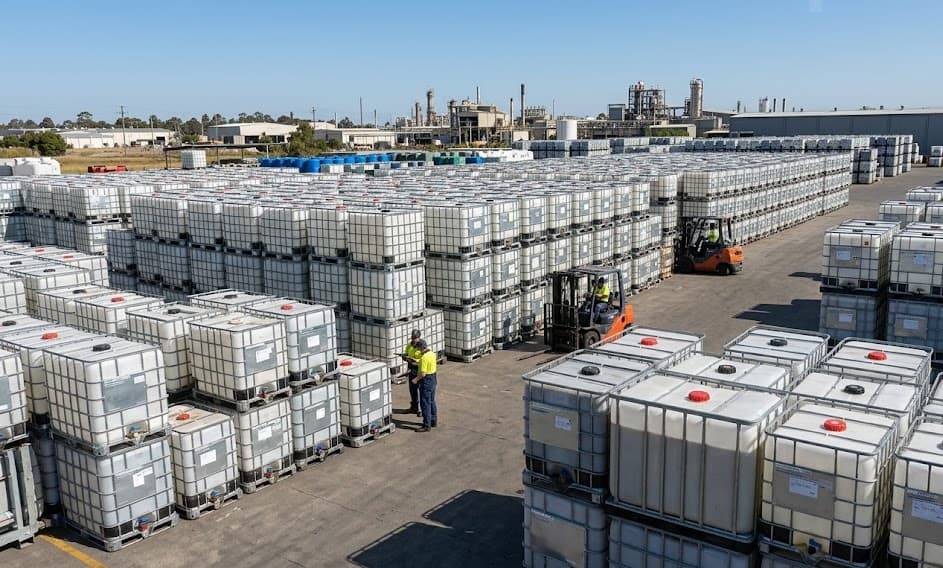
IBC Totes for Chemical Processing
UN-rated, DOT-compliant intermediate bulk containers for the safe storage and transport of hazardous and non-hazardous industrial chemicals.
Get a Free Quote
Chemical Industry Requirements
The chemical processing industry demands containers that meet rigorous safety, compatibility, and regulatory standards. IBC totes used for chemical storage and transport must be manufactured from materials that resist degradation by the stored product, tested to withstand the pressures and impacts of transportation, and certified to meet UN and DOT performance standards. At Cleveland IBC Recycling, we specialize in sourcing, inspecting, and supplying IBC totes that meet these demanding requirements. Whether you need new UN-rated containers for hazardous materials or clean used totes for non-hazardous bulk chemicals, our inventory and expertise have you covered.
Chemical Compatibility Chart
Understanding chemical compatibility is critical when selecting an IBC tote. HDPE (high-density polyethylene) offers broad compatibility with most acids, bases, and aqueous solutions, but certain organic solvents and oxidizers may require special consideration. The chart below covers the most commonly stored chemicals and their compatibility with standard HDPE IBC totes.
| Chemical | HDPE Compatibility | Notes |
|---|---|---|
| Sulfuric Acid (up to 70%) | Excellent | Standard HDPE. Above 70% concentration, consult us. |
| Hydrochloric Acid (up to 37%) | Excellent | Full-strength HCl is compatible with HDPE at ambient temperature. |
| Phosphoric Acid (up to 85%) | Excellent | Widely used in food, chemical, and water treatment industries. |
| Sodium Hydroxide (up to 50%) | Excellent | Caustic soda is fully compatible with HDPE at all common concentrations. |
| Nitric Acid (up to 50%) | Good | Above 50%, HDPE may experience slow degradation. Limit storage time. |
| Methanol | Good | Compatible for short-term storage. Fluorinated HDPE recommended for long-term. |
| Ethanol | Excellent | Compatible at all concentrations. Common in pharmaceutical and food industries. |
| Isopropyl Alcohol | Excellent | Fully compatible. One of the most commonly stored solvents in IBCs. |
| Acetone | Limited | May cause swelling and softening of HDPE over time. Stainless steel recommended. |
| Toluene | Not Recommended | Aromatic solvents permeate and degrade HDPE. Use stainless steel IBCs. |
| Sodium Hypochlorite (up to 15%) | Good | Bleach is compatible, but degrades HDPE over extended periods. Rotate containers. |
| Hydrogen Peroxide (up to 35%) | Good | Compatible at common concentrations. Above 50%, specialized containers required. |
| Ferric Chloride | Excellent | Very common in water treatment. Highly corrosive to metals but safe in HDPE. |
| Propylene Glycol | Excellent | Fully compatible. Used in food, pharmaceutical, and antifreeze applications. |
| Formaldehyde (37% Formalin) | Good | Compatible with HDPE, but ensure adequate ventilation during handling. |
| Xylene | Not Recommended | Aromatic solvent that permeates HDPE. Use fluorinated or stainless steel containers. |
| Acetic Acid (up to 80%) | Good | Compatible at most concentrations. Glacial acetic acid (99%+) may require fluorinated HDPE. |
This chart is a general guide. Chemical compatibility can be affected by concentration, temperature, exposure duration, and the presence of other chemicals. Always consult Cleveland IBC Recycling for specific recommendations for your application.
Chemical Categories We Serve
Acids & Bases
Sulfuric acid, hydrochloric acid, phosphoric acid, sodium hydroxide, and potassium hydroxide are regularly stored and transported in HDPE IBC totes. The high-density polyethylene inner bottle provides excellent chemical resistance to most inorganic acids and bases at typical concentrations. For highly concentrated or oxidizing acids, consult our compatibility team before selecting a tote.
Solvents
Many organic solvents including alcohols (methanol, ethanol, isopropanol), glycols, and glycol ethers are compatible with HDPE IBC totes. However, aromatic solvents like toluene and xylene, as well as chlorinated solvents, can degrade polyethylene over time. We help you determine compatibility and recommend appropriate container types for your specific solvent.
Surfactants & Detergents
Industrial surfactants, detergent concentrates, and cleaning chemical formulations are commonly shipped in bulk via IBC totes. These products are generally fully compatible with HDPE containers, and the bottom-discharge valve simplifies transfer to mixing systems and dilution stations.
Water Treatment Chemicals
Municipal and industrial water treatment plants use IBC totes to store and dose chemicals such as sodium hypochlorite, ferric chloride, polymer flocculants, and pH adjustment chemicals. The 275-gallon format is convenient for metering pumps and chemical feed systems.
Agricultural Chemicals
Bulk herbicides, fungicides, insecticides, and adjuvants are frequently distributed in IBC totes. Proper labeling, rinsing protocols, and container management are critical for agricultural chemical containers to comply with EPA regulations.
Specialty & Intermediate Chemicals
Resins, curing agents, catalysts, and chemical intermediates used in coatings, adhesives, and polymer manufacturing are efficiently handled in IBC totes. Dedicated containers prevent cross-contamination between products.
UN Packing Group Requirements
The United Nations assigns dangerous goods to one of three packing groups based on the degree of danger they present. The packing group determines the performance standards the container must meet, including drop test height and hydraulic pressure test requirements. Understanding packing groups is essential for selecting the correct IBC tote for your chemical application.
Packing Group I (X)
Danger Level: Great Danger
Drop Test: 1.8 meters (5.9 feet)
Pressure Test: 250 kPa (36.3 psi)
Availability: Not available in standard HDPE IBCs
Examples: Fuming nitric acid, oleum, bromine. Note: PG I substances generally cannot be shipped in composite IBCs. Metal or fiber IBCs may be required.
Packing Group II (Y)
Danger Level: Medium Danger
Drop Test: 1.2 meters (3.9 feet)
Pressure Test: 100 kPa (14.5 psi)
Availability: Available - UN31HA1/Y
Examples: Sulfuric acid (>51%), hydrochloric acid (>25%), acetic anhydride, many flammable liquids with flash point below 23 degrees Celsius.
Packing Group III (Z)
Danger Level: Minor Danger
Drop Test: 0.8 meters (2.6 feet)
Pressure Test: 100 kPa (14.5 psi)
Availability: Available - UN31HA1/Z
Examples: Dilute acids, most cleaning chemicals, antifreeze solutions, many water treatment chemicals, flammable liquids with flash point 23-60 degrees Celsius.
Static Electricity & Grounding
Static electricity is a serious ignition risk when handling flammable liquids in HDPE IBC totes. Unlike metal containers, polyethylene does not conduct electricity, allowing static charges to accumulate on the container surface during filling and dispensing operations. Proper bonding and grounding procedures are essential for safe handling of flammable chemicals.
Why Static Is Dangerous
When flammable liquids flow through HDPE (a non-conductive material), friction generates static electricity on the container surface. If the accumulated charge discharges as a spark near flammable vapors, ignition can occur. This risk is highest during filling and emptying operations when liquid flow rates are greatest.
Grounding Requirements
The steel cage of an IBC tote must be bonded and grounded to an earth ground during filling and dispensing of flammable liquids. A bonding wire connects the cage to the receiving vessel, equalizing potential. A grounding wire connects the cage to an earth ground point. Both connections must be verified before every transfer operation.
Antistatic IBC Totes
For flammable liquid applications, antistatic IBC totes are available with conductive HDPE inner bottles that dissipate static charge continuously. These totes feature a measured surface resistivity below 10^9 ohms and include a grounding lug that connects the inner bottle to the cage and earth ground.
Flow Rate Considerations
Reducing the flow rate during the initial filling of an empty IBC tote helps minimize static charge generation. Best practice is to start filling at a low rate until the liquid covers the bottom of the tote (approximately 2-3 inches), then increase to normal flow rate. Splash filling from the top should be avoided; bottom-fill connections are preferred.
Secondary Containment
EPA and Ohio EPA regulations require secondary containment for IBC totes storing hazardous chemicals. Secondary containment prevents spilled or leaked chemicals from reaching the environment. The requirements vary based on the volume and hazard classification of stored chemicals.
Single-Tote Spill Pallets
Polyethylene spill containment pallets designed for a single IBC tote. These pallets typically hold 275+ gallons, meeting the EPA requirement to contain 110% of the largest container volume. The tote sits on a grated surface above the sump, allowing spills to drain into the containment area below.
Multi-Tote Containment
For facilities storing multiple IBC totes, we offer 2-tote and 4-tote containment systems. These larger platforms provide shared containment capacity and are designed to accommodate forklift access for tote placement and removal. Capacity must equal 110% of the largest container or 10% of total stored volume, whichever is greater.
Outdoor Storage Requirements
IBC totes stored outdoors must be protected from stormwater accumulation in containment areas. This can be achieved through covered structures, automatic rainwater drains with shutoff valves, or regular manual draining of accumulated rainwater. Ohio EPA may require a stormwater permit for outdoor chemical storage areas.
Containment Calculations
To calculate required secondary containment capacity: multiply the volume of the largest single container by 110%. For example, a 275-gallon IBC tote requires a minimum of 302.5 gallons of containment capacity. For multiple containers in a shared containment area, also calculate 10% of total aggregate volume and use the larger number.
Safety & Compliance
UN/DOT Certification
UN-rated IBC totes have been tested and certified to meet United Nations performance standards for the transport of dangerous goods. The UN rating (e.g., UN31HA1/Y) specifies the container type, material, packing group, and maximum gross mass. We carry totes rated for Packing Group II and III substances, covering the majority of industrial chemicals.
Hazmat Compatibility
Not all chemicals are compatible with HDPE. Our team maintains detailed chemical compatibility charts and will help you verify that your specific product is safe to store in a polyethylene IBC tote. For chemicals that are incompatible with HDPE, we can source stainless steel IBC totes or recommend appropriate liner options.
Secondary Containment
EPA regulations require secondary containment for stored chemicals to prevent environmental contamination in case of a spill or leak. We offer IBC spill containment pallets and can advise on containment requirements for your facility based on the volume and hazard class of chemicals you store.
Proper Labeling & Placarding
Every chemical IBC tote must be properly labeled with GHS-compliant hazard labels, product identification, and emergency contact information. We ensure that all totes leaving our facility carry the correct markings for the intended contents and application.
Emergency Response Procedures
Every facility storing chemicals in IBC totes should have written emergency response procedures for spills, fires, leaks, and worker exposure incidents. Here is a summary of recommended response actions. These should be customized to your specific chemicals and facility layout.
Spill Response
Immediately isolate the spill area and restrict access. Identify the spilled chemical using the tote label and SDS. Don appropriate PPE (minimum: chemical-resistant gloves, splash goggles, and chemical-resistant apron). Contain the spill using absorbent materials (pillows, booms, or granular absorbent). Do not wash spilled chemicals into drains. Collect absorbed material and dispose of as hazardous waste per applicable regulations.
Fire Involving IBC Totes
HDPE IBC totes will burn and release toxic fumes when exposed to fire. Evacuate the area immediately and call 911. Do not attempt to fight a chemical fire without proper training and equipment. If safe to do so, move uninvolved totes away from the fire. Provide responding firefighters with the SDS for all chemicals stored in the area.
Leaking Container
If an IBC tote develops a leak, move the tote (if safe to do so) to the secondary containment area. Position the leak point upward if possible. Transfer the contents to a compatible, undamaged container using an appropriate pump. Do not attempt to patch or repair a leaking tote that contains hazardous materials. Report all leaks and document the response.
Worker Exposure
If a worker is exposed to chemicals from an IBC tote, follow the emergency procedures on the SDS. For skin contact: remove contaminated clothing and flush the affected area with water for at least 15 minutes. For eye contact: flush eyes with water for at least 15 minutes using an emergency eyewash station. For inhalation: move the worker to fresh air immediately. Seek medical attention for all chemical exposures.
OSHA Requirements
OSHA regulations directly impact how IBC totes containing chemicals are handled, labeled, stored, and managed in the workplace. Here are the key OSHA standards that apply to chemical IBC operations.
All IBC totes containing hazardous chemicals must be labeled with GHS-compliant labels including product identifier, signal word, hazard pictograms, hazard statements, precautionary statements, and supplier identification. Safety Data Sheets must be available for every chemical on-site. Workers must receive training on chemical hazards and label interpretation.
Employers must assess workplace hazards and provide appropriate personal protective equipment for workers handling chemicals in IBC totes. Typical PPE for chemical IBC operations includes chemical-resistant gloves, safety glasses or splash goggles, chemical-resistant aprons, and steel-toed boots. Respiratory protection may be required for volatile chemicals.
Storage of flammable liquids in IBC totes must comply with OSHA flammable liquid storage requirements, including proper ventilation, electrical classification of storage areas, fire suppression systems, and maximum allowable quantities per storage area. IBC totes of flammable liquids must be bonded and grounded during transfer operations.
Facilities storing hazardous chemicals in IBC totes must have written emergency action plans that address chemical spills, fires, worker exposure, and evacuation procedures. Plans must be communicated to all employees and practiced through regular drills.
DOT Shipping Requirements
Transporting hazardous materials in IBC totes on public roads is regulated by the U.S. Department of Transportation under 49 CFR Parts 171-180. Non-compliance can result in significant fines, shipment delays, and liability in the event of an incident. Here are the key DOT requirements for IBC tote shipments.
Proper Shipping Name
Every hazardous material shipped in an IBC tote must be identified by its proper shipping name as listed in the DOT Hazardous Materials Table (49 CFR 172.101). The shipping name must appear on the shipping paper and on the container label.
UN Identification Number
Each hazardous material has a four-digit UN number that must appear on the IBC tote marking and shipping documentation. For example, sulfuric acid is UN1830, and sodium hydroxide solution is UN1824.
Hazard Class and Division
DOT assigns each hazardous material to one of nine hazard classes (e.g., Class 3: Flammable Liquid, Class 8: Corrosive). The hazard class determines labeling, placarding, and handling requirements during transport.
Container Marking
IBC totes used for hazmat transport must display the UN packaging symbol, container specification marking (UN31HA1), packing group rating, maximum gross mass, tare weight, date of manufacture, and manufacturer identification. These markings must be legible and durable.
Shipping Papers
Every shipment of hazardous materials must be accompanied by a shipping paper (bill of lading) that includes the proper shipping name, hazard class, UN number, packing group, quantity, and 24-hour emergency contact number. The driver must have access to these papers at all times during transport.
Placarding
Vehicles carrying hazardous materials in IBC totes may require diamond-shaped placards on all four sides of the vehicle. Placarding requirements depend on the hazard class and quantity being transported. The shipper is responsible for providing the correct placards to the carrier.
Need Chemical-Grade IBC Totes?
Our team can help you select the right container for your specific chemical application. We offer compatibility guidance, UN-rated containers, and bulk pricing for chemical processors throughout Northeast Ohio and beyond.
Whether you need new UN-certified totes for regulated hazmat shipping, clean reconditioned totes for non-hazardous chemicals, or secondary containment pallets to complete your storage setup, Cleveland IBC Recycling is your single-source solution for chemical container needs.