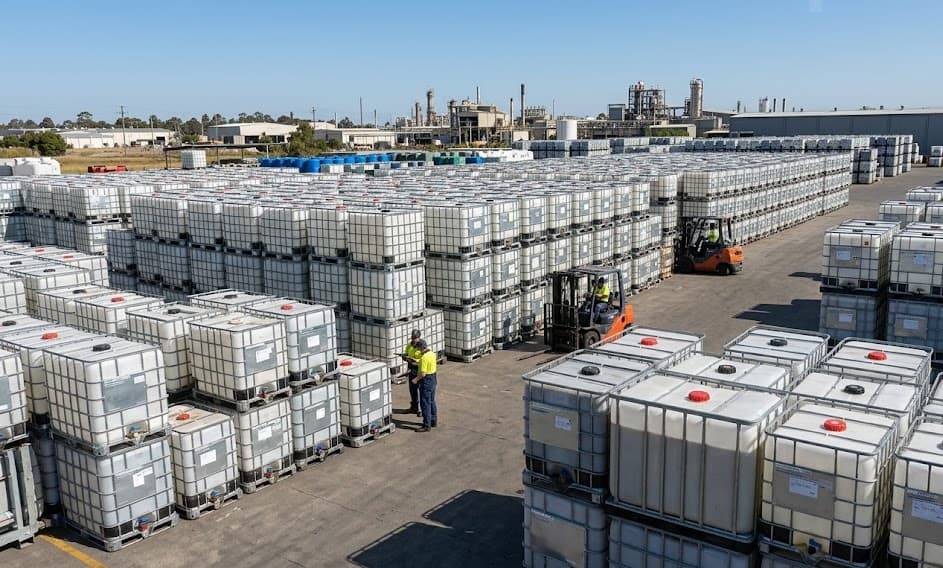
Used IBC Totes
Inspected, honestly graded, and priced to save you 40�70% compared to new containers. Cleveland's largest selection of second-hand IBC totes, ready for immediate pickup or delivery.
Get a Free Quote
Why Buy Used?
A new 275-gallon IBC tote typically costs $250 to $400. A used tote in good condition starts at under $100. For businesses that go through dozens or hundreds of containers a year, that difference adds up to thousands of dollars � with zero compromise on functionality.
Beyond the cost savings, buying used is one of the simplest ways to reduce your environmental footprint. Each reused tote keeps roughly 30 pounds of HDPE plastic and 25 pounds of steel out of the waste stream. When you multiply that across a full order, you are making a measurable impact on landfill diversion and raw-material demand.
At Cleveland IBC Recycling, every used tote is visually inspected, leak-tested, and assigned a transparent grade before it is listed for sale. You always know exactly what you are getting.
Understanding Tote Grades
Grade A � Like New
Remaining Life: 80 � 90% of original service lifeDescription
Used only once or twice for non-hazardous, non-staining liquids. Minimal cosmetic wear � the cage is straight, the bottle is clear or lightly tinted, and the valve operates smoothly.
What It Looks Like
Clear or near-clear HDPE bottle with no visible staining. Cage wires are straight with no dents or bends. Original labels may still be intact. Pallet shows minimal fork-tine wear. Valve handle is undamaged and gaskets are pliable.
Best For
Food-adjacent storage, potable water collection, clean chemical transfer, and any application where appearance and cleanliness matter.
Typical Previous Contents
Food-grade syrups, edible oils, non-hazardous soap bases, purified water, glycerin.
Grade B � Good Condition
Remaining Life: 60 � 75% of original service lifeDescription
Multiple-use totes with moderate cosmetic wear. The bottle may show some discoloration or light staining, and the cage could have minor dents. Structurally sound with fully functional valves.
What It Looks Like
Bottle has a yellow, amber, or light blue tint from previous contents. Cage may have 1�3 small dents but no bent tubes. Labels are partially removed or have adhesive residue. Pallet is functional with moderate wear. Valve operates smoothly; gasket may show compression but holds seal.
Best For
Agricultural irrigation, non-potable water storage, industrial solvents, fertilizer mixing, and general-purpose liquid transfer.
Typical Previous Contents
Agricultural chemicals, industrial detergents, antifreeze, non-hazardous solvents, lubricant additives.
Grade C � Economy
Remaining Life: 40 � 55% of original service lifeDescription
Heavily used totes with noticeable cosmetic wear � staining, label residue, cage dents, or yellowed bottles. Still structurally intact and leak-free, but not suitable for food or potable water.
What It Looks Like
Bottle is opaque or heavily tinted from repeated use. Significant label residue or marker writing on cage. Multiple cage dents (none compromising structure). Pallet shows heavy forklift wear. Valve functional but may be stiff. Gasket may need replacement for demanding applications.
Best For
Waste collection, rainwater harvesting, construction-site water, dust suppression, and non-critical bulk storage where aesthetics are irrelevant.
Typical Previous Contents
Mixed industrial chemicals, inks, dyes, waste oils, construction-site fluids, de-icing brine.
Standard Specifications
| Specification | 275-Gallon | 330-Gallon |
|---|---|---|
| Capacity | 275 gal / 1,040 L | 330 gal / 1,249 L |
| Dimensions (L x W x H) | 48 x 40 x 46 in | 48 x 40 x 53 in |
| Tare Weight | ~120 lb | ~145 lb |
| Bottle Material | HDPE | HDPE |
| Cage Material | Galvanized steel | Galvanized steel |
| Pallet | Steel or composite | Steel or composite |
| Valve | 2-inch butterfly or ball | 2-inch butterfly or ball |
| Top Opening | 6-inch screw cap | 6-inch screw cap |
Common Applications
Agriculture & Irrigation
Bulk water transport for crop irrigation, livestock watering, and fertilizer mixing on farms across Ohio. Used totes are the standard choice for field-side liquid storage.
Manufacturing
Store and transfer solvents, coolants, lubricants, and process chemicals on the production floor. Grade B totes handle the vast majority of non-food manufacturing needs.
Construction
On-site water supply for dust control, concrete mixing, and temporary plumbing during builds. Grade C totes are ideal for tough job-site conditions.
Landscaping
Transport mulch tea, compost leachate, and bulk water for large-scale landscaping and nursery operations. Totes mount easily on flatbed trailers.
Food & Beverage
Grade A totes for storing syrups, oils, vinegar, juice concentrates, and other non-hazardous food liquids. Always pair with a food-grade liner for maximum safety.
Rainwater Collection
Affordable rainwater harvesting for homeowners, community gardens, and off-grid properties. A single 275-gallon tote captures thousands of gallons per season.
Chemical Distribution
Distribute non-regulated chemicals like cleaning solutions, water treatment additives, and industrial degreasers. Used totes keep packaging costs low for high-volume distributors.
Waste & Recycling
Collect and contain waste oils, spent solvents, and rinse water for proper disposal. Grade C totes are purpose-built for cost-effective waste management.
Emergency Preparedness
Stockpile non-potable water for fire suppression, generator cooling, or community disaster response. Affordable enough to deploy in quantity across multiple locations.
Aquaculture & Fish Farming
Used IBC totes serve as fish tanks, water reservoirs, and bio-filter housings in small-scale aquaculture and aquaponics operations.
Pressure Washing
Mobile water supply for pressure-washing trucks and trailers. The IBC cage protects the bottle during transport over rough roads and job sites.
Dust Suppression
Mining operations, gravel pits, and demolition sites use IBC totes to store and dispense water for dust control. Grade C totes handle the abuse of heavy-equipment environments.
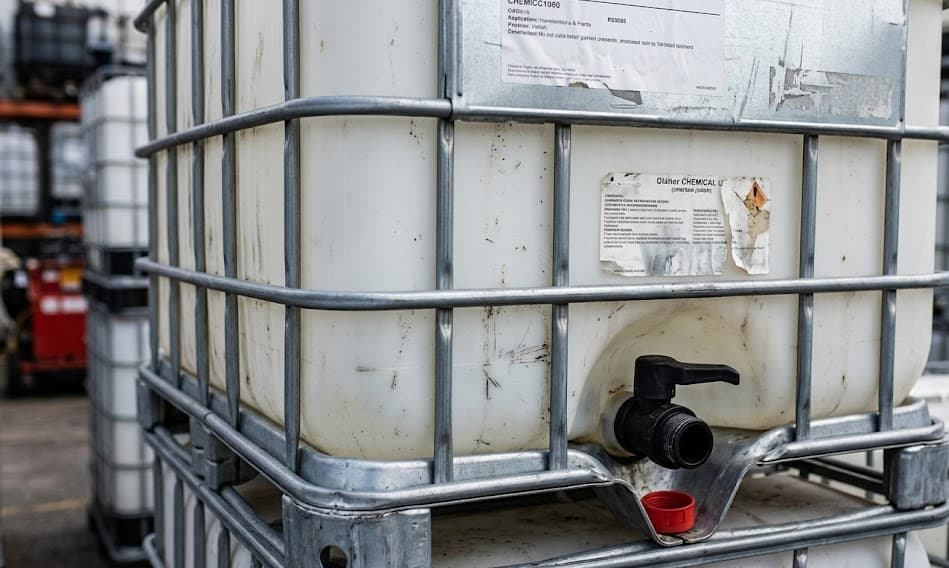
Every Tote Tells a Story
Our inspection process ensures each used tote meets quality standards before resale.
Pricing Factors Explained
Used IBC tote pricing is not one-size-fits-all. Several variables determine what you will pay per unit. Understanding these factors helps you make a more informed purchase and potentially find savings by adjusting your requirements.
Grade (A, B, or C)
The single biggest pricing variable. Grade A commands a premium for cleanliness and cosmetic condition. Grade C is priced at the economy end for buyers who prioritize function over appearance.
Capacity (275 vs. 330 gal)
330-gallon totes cost slightly more due to the taller bottle and additional material. The price difference is typically $15�$30 per unit depending on grade.
Previous Contents
Totes that held food-grade or non-staining liquids grade higher and cost more. Containers from chemical or industrial sources grade lower even if structurally sound.
Order Quantity
Volume discounts kick in at 5 units and increase at each tier. Orders over 50 units receive significant per-unit savings that can offset delivery costs entirely.
Valve Condition
Totes with fully functional, like-new valves command a slight premium over units where the valve is stiff or needs replacement. We can install a new valve for a small upcharge.
Pallet Type
Steel-pallet totes are slightly more valuable than composite-pallet units for customers who need maximum stacking strength and forklift durability.
Season & Supply
Spring and summer see higher demand for agricultural and landscaping totes. Prices may fluctuate slightly based on current supply levels in our yard.
15-Point Inspection Checklist
Every used IBC tote in our inventory passes through this 15-point inspection before being graded and listed for sale. This checklist ensures you receive a tote that matches its advertised grade � no surprises, no hidden defects.
| # | Checkpoint | What We Look For |
|---|---|---|
| 01 | Bottle clarity and color | Is the HDPE bottle clear, lightly tinted, or opaque? Heavy discoloration indicates extended use and affects grade. |
| 02 | Bottle wall thickness | We check for thinning from chemical exposure or UV degradation. Thin spots compromise structural integrity under pressure. |
| 03 | Bottle surface cracks | Micro-cracks and stress lines are identified under bright light. Any cracking results in rejection from the sales line. |
| 04 | Interior residue and odor | The bottle interior is checked for remaining residue, staining patterns, and chemical odors that indicate previous contents. |
| 05 | Cage wire straightness | Each vertical and horizontal wire is inspected for dents, bends, and deformation. Minor dents are acceptable for Grade B; major dents push to Grade C. |
| 06 | Cage weld integrity | Weld joints are checked for cracks, separation, and rust. Failed welds compromise stacking safety and result in rejection. |
| 07 | Cage coating / rust | Galvanized coating is assessed for chipping, peeling, and rust progression. Surface rust is acceptable; penetrating rust is not. |
| 08 | Pallet condition | Steel pallets are checked for cracks, bent runners, and fork-pocket damage. Composite pallets are checked for splits and delamination. |
| 09 | Pallet-to-cage connection | The bolts and brackets connecting the cage to the pallet must be secure. Loose connections create handling hazards. |
| 10 | Top cap and gasket | The 6-inch screw cap is tested for thread engagement and seal. The cap gasket is checked for compression set and chemical degradation. |
| 11 | Bottom valve operation | The discharge valve is cycled fully open and closed to confirm smooth operation, positive shut-off, and no dripping. |
| 12 | Valve gasket seal | The valve gasket is inspected for cracking, swelling, and compression. A leaking valve gasket can be replaced, but it affects grade if original. |
| 13 | Label and marking removal | Previous contents labels, hazmat diamonds, and shipping markings are checked. Grade A totes have labels fully removed or residue-free. |
| 14 | Fill-level leak test | Totes destined for Grade A or reconditioning are filled with water to check for slow leaks at seams, cap, and valve. |
| 15 | Overall structural stability | The fully assembled tote is checked for lean, wobble, and cage-to-bottle fit. Unstable units are rejected or repaired before sale. |
Previous Contents Guide
What a tote held in its first life matters. This guide helps you understand how previous contents affect grading, pricing, and suitability for your intended use.
Category
Food-Grade Liquids
Examples
Edible oils, syrups, vinegar, glycerin, food-grade alcohols, juice concentrates
Reuse Suitability
Excellent � these totes grade highest and are suitable for a wide range of subsequent uses including food storage with proper cleaning.
Category
Soaps & Detergents
Examples
Liquid soaps, surfactants, cleaning concentrates, laundry chemicals
Reuse Suitability
Very good � soap residue is generally easy to rinse out. These totes often grade as A or B depending on cosmetic condition.
Category
Agricultural Chemicals
Examples
Fertilizer concentrates, herbicides, pesticides, soil amendments
Reuse Suitability
Good for agricultural reuse � not recommended for food or potable water. Thorough rinsing required. Typically Grade B.
Category
Industrial Solvents
Examples
Degreasers, parts-washing fluids, isopropyl alcohol, acetone
Reuse Suitability
Acceptable for similar industrial use. Solvent residue can affect HDPE over time. Triple-rinse recommended. Usually Grade B or C.
Category
Paints, Inks & Dyes
Examples
Water-based paints, printing inks, textile dyes, pigment dispersions
Reuse Suitability
Limited reuse � permanent staining is common. These totes typically grade C and are best for waste collection or non-critical storage.
Category
Hazardous Materials
Examples
Corrosive acids, bases, regulated chemicals
Reuse Suitability
Not sold as used. Hazardous-material totes are either professionally decontaminated for reconditioning or responsibly recycled.
Stacking & Storage Tips
Proper storage extends the life of your used IBC totes and prevents safety hazards. Follow these guidelines whether you are storing one tote in your backyard or managing a warehouse of hundreds.
Never stack full totes more than two high
The steel cage is engineered for two-high stacking when filled to capacity. Three-high stacking with full loads risks cage collapse and catastrophic spill.
Empty totes can stack four high
When completely drained and dry, empty IBC totes can be safely stacked up to four high for efficient warehouse storage and transport.
Align totes squarely on level ground
Offset stacking or uneven ground causes unequal weight distribution, leading to cage deformation and tipping hazards.
Store out of direct prolonged sunlight
HDPE degrades under UV exposure over months and years. If outdoor storage is necessary, position totes under shade structures or use UV-resistant covers.
Keep valves closed and capped during storage
Even empty totes should have valves closed and dust caps in place to prevent contamination from insects, debris, and weather.
Inspect stacked totes monthly
Check for cage settling, leaning, and pallet degradation. Restack or replace damaged units before they become safety hazards.
Leave aisle access for forklift
Plan your storage layout with at least 12 feet of clearance between rows for forklift maneuvering. IBC totes are accessible from two sides only.
Secure outdoor totes against wind
Empty IBC totes are surprisingly light and can shift or topple in high winds. Strap or chain outdoor stacks to fixed structures when possible.
Environmental Impact
Choosing a used IBC tote is not just a budget decision � it is an environmental one. Here is what each reused container saves:
~30 lb
HDPE plastic kept from landfill
~25 lb
Steel diverted from scrap
62%
Lower carbon footprint vs. new production
100%
Recyclable at end of life
Per-Unit Environmental Savings Breakdown
Manufacturing a new 275-gallon IBC tote from virgin materials requires approximately 42 kWh of energy, 18 gallons of water, and generates around 35 pounds of CO2 equivalent emissions. When you buy used, you avoid that entire manufacturing footprint. Over the course of a year, a business that switches from new to used totes for just 100 units avoids:
- 4,200 kWh of energy � enough to power an average Ohio home for 5 months
- 1,800 gallons of industrial process water
- 3,500 pounds of CO2 equivalent greenhouse gas emissions
- 3,000 pounds of HDPE plastic demand from petrochemical feedstocks
- 2,500 pounds of virgin steel demand from mining and smelting
Frequently Asked Questions
How much does a used IBC tote cost?
Pricing depends on grade, capacity, and order quantity. Grade C 275-gallon totes start around $75. Grade A 275-gallon totes range from $120 to $150. Grade B falls in between. Volume discounts of 5�25% apply for orders of 5 or more units.
Can I use a used IBC tote for drinking water?
We do not recommend used IBC totes for potable (drinking) water unless you install a food-grade liner and the tote previously held only food-grade contents. For potable water, a new or reconditioned food-grade tote with a liner is the safer choice.
What were the previous contents of the tote?
We document previous contents whenever the information is available from the original user. If the source is unknown, we note that on the tote record and grade accordingly. You can request previous-contents information for any tote in our inventory.
Do you deliver used IBC totes?
Yes. We offer local delivery within 50 miles of Cleveland, regional LTL freight across Ohio and neighboring states, and national shipping via full truckload or LTL carriers. Pickup from our facility is also available during business hours.
Can I return a used tote if it does not meet expectations?
Absolutely. If a tote arrives and does not match the grade or condition described, contact us within 7 days. We will arrange a replacement or full refund, including return shipping costs if applicable.
How do I clean a used IBC tote before use?
For most non-food applications, a thorough rinse with a garden hose is sufficient. For more demanding uses, fill the tote with a dilute bleach or citric acid solution, let it sit for 24 hours, drain, and rinse twice with clean water. For food contact, we recommend purchasing a reconditioned food-grade tote instead.
Are used IBC totes safe for storing chemicals?
Used HDPE IBC totes are compatible with a wide range of non-oxidizing chemicals. However, always verify chemical compatibility with HDPE before filling. Concentrated acids, strong oxidizers, and certain aromatic solvents can degrade HDPE over time. When in doubt, contact us with the specific chemical and we can advise.
How long will a used IBC tote last?
Depending on grade and storage conditions, a used IBC tote can last 3�10 additional years. UV exposure is the primary aging factor for HDPE. Totes stored indoors or under cover will outlast those in direct sunlight by a significant margin.
Can I stack used totes when full?
Yes � used IBC totes in Grade A and B condition are safe for two-high stacking when full, just like new totes. Grade C totes should be inspected individually; those with significant cage damage may not be safe for stacking when loaded.
Do you buy back used IBC totes?
Yes. We purchase used IBC totes from businesses across Northeast Ohio. If you have empty totes you no longer need, contact us for a buyback quote. We pick up from your location for orders of 10 or more totes.
Ready to Order?
Tell us how many totes you need, what grade works for your application, and whether you need pickup or delivery. We will have a quote back to you the same business day.