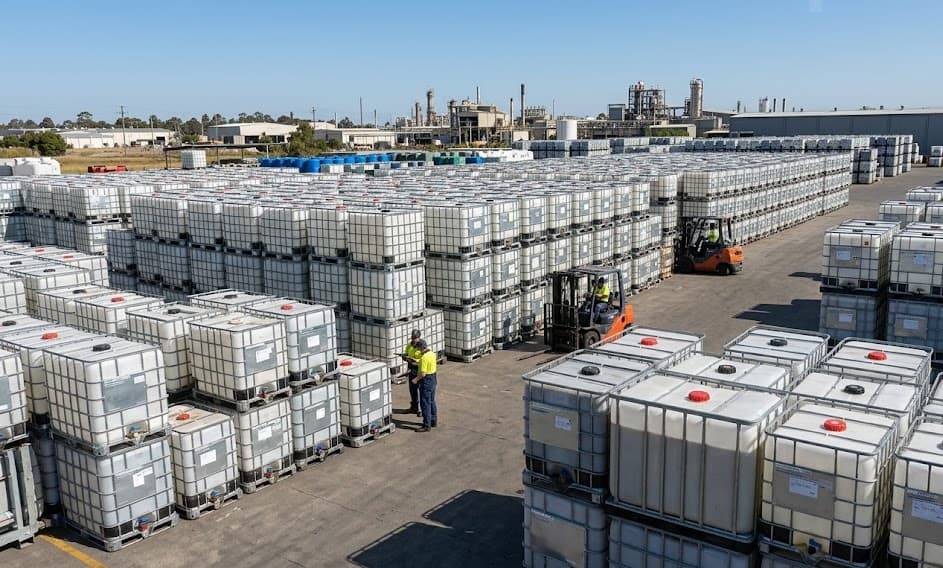
When specifying IBC totes for your operation, one of the first decisions you face is the fundamental container type: stainless steel or composite (HDPE bottle in a steel cage). Both designs hold 275 to 330 gallons of liquid and share the same standardized footprint, but their construction differences create distinct advantages and limitations that matter for different applications, budgets, and operational requirements. This comparison lays out the key factors to help you make an informed choice.
Material and Construction. Composite IBC totes consist of a high-density polyethylene inner bottle surrounded by a welded tubular steel cage on a pallet base. The HDPE bottle is blow-molded in a single piece, creating a seamless, non-porous interior surface. The cage provides structural support for stacking, handling, and impact protection. Stainless steel IBCs are fabricated entirely from stainless steel — typically 304 or 316L grade — with a welded tank body, integrated structural supports, and stainless or mild steel pallet runners. Some stainless models include a mild steel outer cage for additional protection.
Chemical Compatibility. HDPE is resistant to a wide range of acids, bases, alcohols, and aqueous solutions, making composite totes suitable for the vast majority of industrial and food-grade liquids. However, HDPE has limited resistance to strong organic solvents, aromatic hydrocarbons (toluene, xylene), chlorinated solvents, and certain concentrated oxidizers. These chemicals can swell, soften, or permeate the plastic, compromising the container's integrity.
Stainless steel offers broader chemical compatibility, particularly with organic solvents and aggressive chemicals that would damage HDPE. Grade 316L stainless steel, with its molybdenum content, provides excellent resistance to chloride-containing solutions and pitting corrosion. However, stainless steel is vulnerable to strong mineral acids (especially hydrochloric and hydrofluoric acid) and concentrated caustic solutions at elevated temperatures. For any specific chemical, consult a compatibility chart for both materials before making a decision.
Temperature Range. Composite totes operate within a temperature range of approximately minus 40 to plus 140 degrees Fahrenheit under normal conditions. The HDPE bottle can soften and deform at higher temperatures, and the structural properties of the plastic change at the extremes. Stainless steel IBCs handle a much wider temperature range — from cryogenic temperatures to well above 300 degrees Fahrenheit — making them the clear choice for hot-fill applications, heated storage, and cryogenic liquids.
Cleanability and Hygiene. Stainless steel has a significant advantage in cleanability. Its non-porous, smooth surface does not absorb or retain chemicals, odors, or biological contaminants. It can be cleaned with aggressive chemicals, steam sterilized, and polished to a mirror finish for pharmaceutical and biotech applications. CIP (clean-in-place) systems are highly effective on stainless steel surfaces. Composite totes are cleanable, but the semi-porous nature of HDPE means that certain chemicals and flavors can absorb into the plastic over time, making complete decontamination between product changes difficult. This is why composite totes used for food-grade applications require careful matching of previous contents to future use.
Service Life and Durability. Stainless steel IBCs are built to last for decades. With proper maintenance, a stainless steel tote can serve 20 years or more of continuous use. The material does not degrade from UV exposure, does not become brittle with age, and can withstand repeated mechanical impacts without fracture. Composite totes have a shorter service life — typically 5 to 10 years depending on use conditions — primarily because the HDPE bottle gradually degrades from UV exposure, chemical contact, and mechanical stress. The steel cage and pallet often outlast the bottle, which is why rebottling (replacing the inner bottle while retaining the cage) is a common reconditioning practice.
Cost. The cost difference between stainless steel and composite IBCs is substantial. A new stainless steel IBC typically costs between $2,500 and $5,000 or more, depending on grade, fittings, and certifications. A new composite IBC costs between $300 and $600. Reconditioned composites are available for $100 to $250. The upfront cost of stainless steel is offset by its longer service life and higher residual value, but the payback period depends on your specific use frequency and the products you handle.
Weight and Handling. An empty composite IBC weighs approximately 120 to 150 pounds. An empty stainless steel IBC weighs 250 to 450 pounds or more. The weight difference affects shipping costs, forklift handling, and the structural requirements for racking and storage systems. For operations that move totes frequently or stack them multiple levels high, the lighter weight of composite totes can be a meaningful operational advantage.
Regulatory Considerations. Both composite and stainless steel IBCs can be UN-certified for the transport of hazardous materials, but stainless steel IBCs have an advantage for materials that are incompatible with HDPE. Stainless steel IBCs do not have the 5-year maximum service life that applies to composite IBCs under DOT hazmat regulations, which means they can remain in hazmat service indefinitely as long as they pass periodic inspections.
When to Choose Composite. Composite IBC totes are the right choice for most general-purpose liquid storage and transport applications — water, aqueous chemicals, food ingredients, cleaning products, agricultural chemicals, and similar materials. They are cost-effective for operations that cycle through large numbers of containers, and the reconditioning market provides a steady supply of affordable used and reconditioned units. If your products are compatible with HDPE and your operating temperatures stay within the plastic's range, composite totes deliver outstanding value.
When to Choose Stainless Steel. Stainless steel IBCs are the right choice for operations that handle organic solvents, aromatic chemicals, or other materials incompatible with HDPE; require hot-fill or heated storage; need the highest levels of cleanability and hygiene for pharmaceutical, biotech, or sensitive food applications; or want a single container that will last for decades and retain high residual value.
At Cleveland IBC Recycling, we primarily deal in composite IBC totes, which represent the overwhelming majority of the market. We stock used, reconditioned, and new composite totes in a range of grades and configurations. If your evaluation points toward stainless steel, we can advise you on suppliers and help you understand the total cost of ownership comparison for your specific application.