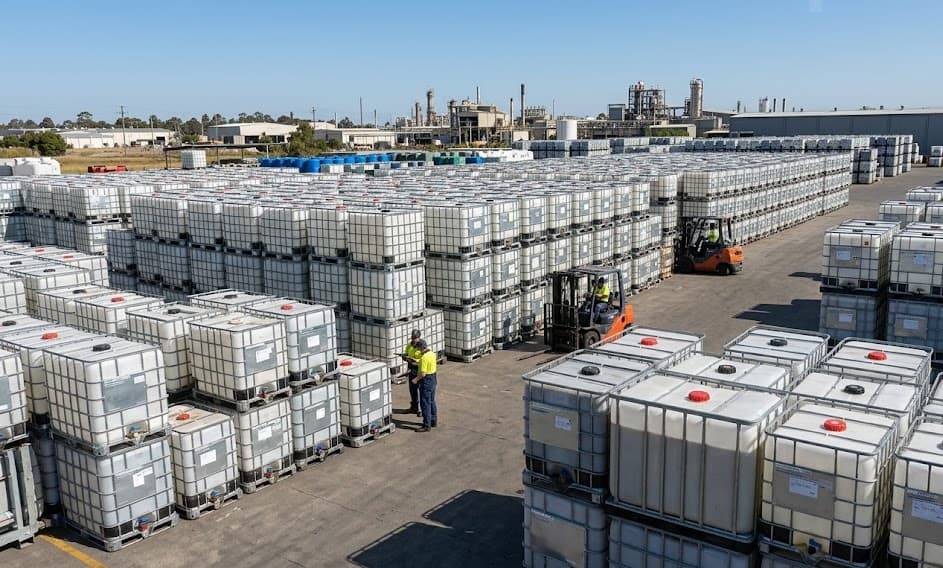
Buying used IBC totes can save your business a substantial amount of money, but only if the containers you purchase are actually fit for their intended use. A used tote that looks acceptable at first glance might have hidden issues — a hairline crack in the bottle, a compromised valve seal, or a cage defect that makes it unsafe to stack. A thorough pre-purchase inspection protects your investment and ensures that the totes you buy will perform reliably. Here is a systematic inspection checklist that covers every critical element.
Start With Documentation. Before you even look at the physical tote, ask the seller for documentation. A reputable seller should be able to tell you the previous contents of the container, the date of manufacture (from the UN marking), any reconditioning history, and the grade assigned to the tote. If the seller cannot provide information about previous contents, exercise caution — you do not know what chemicals may have been absorbed into the HDPE or what residues remain in the valve and fittings. For food-grade applications, documented previous contents are an absolute requirement, not a nice-to-have.
Inner Bottle — Exterior Visual Inspection. Look at the outside of the HDPE bottle through the cage bars. Check for cracks, which appear as white or translucent lines on the surface. Pay special attention to the corners and edges where the bottle meets the cage, as these areas experience the most stress during handling and stacking. Look for deep scratches, gouges, or punctures that penetrate through the wall of the bottle. Surface scratches are cosmetic and acceptable; cuts that go through the full wall thickness make the tote unusable. Check for discoloration — heavy yellowing or browning indicates prolonged UV exposure or chemical degradation. Some staining from previous contents is normal for Grade B and C totes, but extreme discoloration suggests the plastic may be compromised.
Inner Bottle — Interior Inspection. Open the top cap and look inside the bottle. Use a flashlight to illuminate the interior and check for residual product, staining, sediment, or biological growth (mold, algae). Sniff the interior — a strong chemical odor indicates residual contamination that may be difficult to remove. Look for crazing on the interior walls, which appears as a network of fine surface cracks and indicates material fatigue. Check the bottom of the bottle for standing liquid, sediment, or damage. If the seller has cleaned the tote, the interior should be visibly clean and free of odors.
Valve and Fittings. Operate the bottom valve by opening and closing it several times. The handle should move smoothly without excessive force. A butterfly valve should rotate freely; a ball valve should click into the open and closed positions with a positive detent. Check for leaks by filling the tote with a small amount of water and opening the valve over a clean container — there should be no drips from around the valve body, handle shaft, or gasket. Inspect the gasket for swelling, cracking, or deformation. A bad gasket is a cheap and easy fix, but it tells you something about how well the tote has been maintained. Check the valve outlet thread for damage — crossed threads or stripped fittings will prevent proper hose connections.
Steel Cage. Inspect the cage systematically, starting at the top and working down. Check for bent or dented bars. Minor dents are cosmetic, but bars that are bent more than a quarter inch out of alignment can prevent proper stacking and compromise the cage's structural integrity. Look for broken welds, which appear as cracks or separations at the joints where bars meet the frame. A cage with broken welds is a structural failure risk and should be avoided unless you intend to have it repaired. Check for rust. Light surface rust on galvanized steel is normal and not a structural concern, but heavy rust — particularly at weld points and the lower cage bars — indicates corrosion that is weakening the metal. Rust scale that flakes off when touched suggests advanced corrosion.
Check the top frame of the cage, which includes the fill opening and any lifting points. The fill opening should be round and undamaged, and the cap should thread on smoothly. If the cage has lifting eyes, check that they are firmly welded and free of cracks.
Pallet Base. The pallet base bears the full weight of the loaded tote and takes the most abuse from forklift handling. For wooden pallets, check for cracked or broken boards, protruding nails, rot, and insect damage. For steel pallets, check for bent runners, cracked welds, and corrosion. For plastic pallets, check for cracks, chips, and deformation. The forklift entry points should be clear and undamaged — the forklift operator needs to slide forks in and out smoothly without catching on damaged material. Set the tote on a level floor and check that it sits flat without rocking. A tote that does not sit level will be unstable when stacked.
UN Marking Plate. Locate the UN marking plate on the cage and verify that it is legible. Record the date of manufacture, packing group designation, and maximum gross mass. If the tote is more than 5 years old and you intend to use it for hazmat transport, it is beyond its certified service life for that purpose. Even for non-hazmat use, a very old tote (8 or more years from manufacture) may have HDPE that is approaching the end of its reliable service life.
Leak Test. If possible, perform a leak test before completing the purchase. Fill the tote with water to at least half capacity and let it sit for 30 minutes. Inspect all surfaces, the valve, the cap, and the bottle-to-cage interface for any signs of leaking, weeping, or sweating. A tote that passes a water leak test with clean water at ambient temperature will likely perform well in service.
Summary and Grading. After completing your inspection, you should be able to assign your own grade to the tote and determine whether it is suitable for your application. A tote with a clean interior, intact cage, good valve, and solid pallet is a solid Grade A or B purchase. A tote with staining, minor cage dents, and a functional but worn valve is a typical Grade B or C. A tote with cracks, broken welds, heavy rust, or a compromised pallet should be either rejected or purchased only for non-critical applications at a deep discount.
At Cleveland IBC Recycling, we inspect and grade every tote in our inventory before it goes on sale, and we are happy to walk customers through our inspection process and findings. If you are buying totes from another source and want an independent assessment, bring them to our Cleveland facility and our team will evaluate them for you.