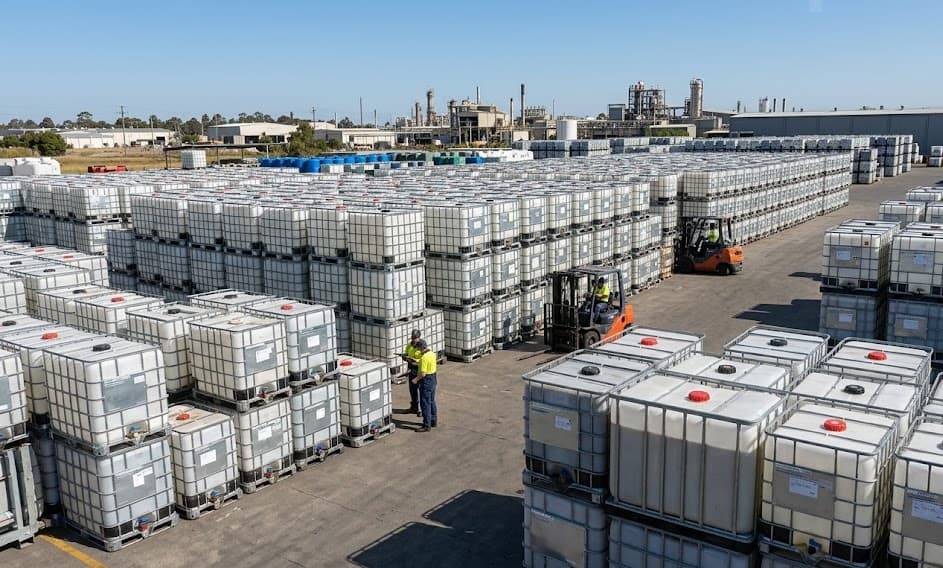
An IBC tote is a significant investment, and with proper maintenance, it can serve your operation reliably for years. Neglect, however, accelerates degradation and can turn a perfectly good container into a safety hazard or a costly disposal problem. These maintenance practices will help you extend the service life of your IBC totes, reduce replacement costs, and maintain the integrity of the products you store.
UV Protection. The single greatest threat to the longevity of an IBC tote stored outdoors is ultraviolet radiation from sunlight. HDPE is susceptible to UV degradation, which causes the plastic to become brittle, discolored, and prone to cracking over time. If you must store totes outside, take steps to minimize sun exposure. Position totes under a roof, awning, or shade structure whenever possible. If shade is not available, use UV-resistant tote covers that shield the inner bottle from direct sunlight. Some manufacturers add UV stabilizers to their HDPE formulations, but even these treated bottles will degrade faster with prolonged sun exposure compared to totes stored indoors or under cover.
Temperature Management. HDPE performs well across a wide temperature range, but extreme heat and cold can both cause problems. High temperatures — particularly sustained exposure above 140 degrees Fahrenheit — can soften the plastic, accelerate chemical migration from residual contents, and reduce the structural strength of the bottle. In summer, avoid storing full totes in direct sunlight where surface temperatures can exceed ambient air temperature by 30 degrees or more. In winter, remember that water and many aqueous solutions expand when they freeze. A tote filled to capacity with a water-based product that freezes can crack the bottle. Leave headspace to accommodate expansion, or store totes in a heated or insulated area during cold months.
Valve Maintenance. The bottom valve is the most mechanically active component on an IBC tote and the most common point of failure. Inspect valves regularly for leaks, stiffness, and physical damage. Butterfly valves should open and close smoothly with moderate hand pressure — if a valve is difficult to turn or does not seal completely, replace it before the next fill. Always close the valve and install a dust cap when the tote is empty to keep debris, insects, and moisture out of the valve body. Replace gaskets at every reconditioning cycle or whenever you notice leaking around the valve connection.
Cleaning Between Uses. Even if you are refilling a tote with the same product, periodic cleaning prevents the buildup of residues, sediments, and microbial contamination. At minimum, rinse the tote with clean water between fills and inspect the interior for discoloration, odors, or visible deposits. For food-grade applications, clean and sanitize between every fill cycle following the protocol described in your food safety plan. A tote that is consistently maintained between uses will require less intensive cleaning when it eventually goes for reconditioning.
Cage Inspection. The steel cage protects the inner bottle from physical damage and provides the structural framework for stacking and handling. Inspect the cage regularly for bent bars, broken welds, and rust. Minor surface rust can be addressed with a wire brush and rust-inhibiting paint. Bent bars should be straightened or the tote should be taken out of stacking service until repairs are made. A cage with broken welds is a serious structural concern and should be evaluated by a professional before the tote is loaded or stacked.
Pallet Base Care. The pallet base takes the brunt of forklift handling and floor wear. Wooden pallets should be inspected for cracked boards, protruding nails, and rot. Steel and plastic pallets should be checked for cracks, bends, and damage to forklift entry points. A compromised pallet base can cause the tote to sit unevenly, which stresses the cage and bottle during stacking and can lead to tipping during transport. Replace damaged pallet bases rather than continuing to use a tote with an unreliable foundation.
Proper Stacking. IBC totes are designed to be stacked, but only within the limits specified by the manufacturer. Check the stacking load rating on the UN marking plate and do not exceed it. Stack totes on level, stable surfaces and ensure that the upper tote is centered on the lower one so that the weight transfers through the cage structure rather than bearing on the inner bottle. Never stack more than two totes high unless the manufacturer explicitly approves three-high stacking for the specific model.
Labeling and Tracking. Maintain clear, accurate labels on every tote in your inventory. Labels should include the current contents, the date of filling, the previous contents, the cleaning date, and the tote's unique identification number. A good tracking system helps you rotate inventory on a first-in-first-out basis, identify totes that are due for reconditioning, and remove aging containers from service before they become unreliable.
Know When to Retire. No IBC tote lasts forever, and using a container past its safe service life is a false economy. Signs that a tote should be retired from active service include visible crazing or micro-cracks in the HDPE bottle, persistent odor that does not respond to cleaning, yellowing or opacity changes in the plastic, a cage with multiple damaged areas that cannot be economically repaired, and a UN certification date that is approaching the maximum service life for your application. When a tote reaches end of life, send it to a recycler like Cleveland IBC Recycling rather than letting it sit in your yard and deteriorate further.
Consistent maintenance is not glamorous, but it pays for itself many times over in extended tote life, reduced replacement purchases, and the confidence that your containers are safe and reliable. A well-maintained tote is a productive asset; a neglected one is a liability waiting to happen.