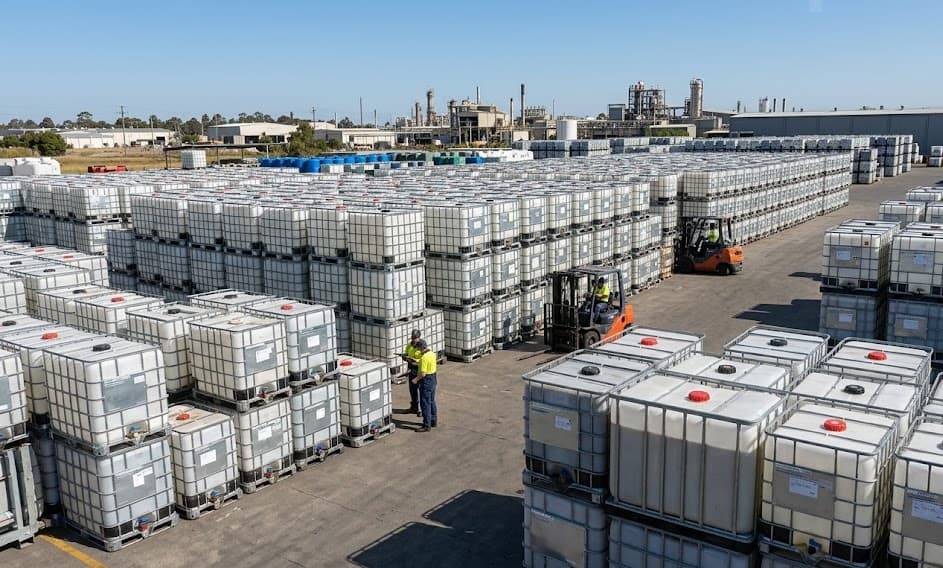
Agriculture is one of the largest and fastest-growing markets for IBC totes, and for good reason. Farms, ranches, greenhouses, and nurseries deal with large volumes of liquids every day — water, fertilizers, pesticides, herbicides, livestock supplements, and more — and the IBC tote's combination of capacity, portability, durability, and low cost makes it the ideal container for agricultural liquid management. This guide covers the most common agricultural applications for IBC totes and the practical considerations that farm operators should keep in mind.
Water Storage and Distribution. Water is the most fundamental agricultural input, and reliable access to large quantities of clean water is essential for crop production, livestock care, and general farm operations. IBC totes serve as portable water reservoirs that can be positioned anywhere on a farm — in fields, pastures, barns, greenhouses, or alongside processing areas. A standard 275-gallon tote provides enough water to sustain a small drip irrigation system for days, fill livestock troughs for a week, or supply hand-washing and equipment-rinsing stations throughout a workday. Multiple totes can be linked in series for greater capacity, and the integrated bottom valve simplifies gravity-fed distribution or pump connection.
Fertigation Systems. Fertigation — the practice of delivering dissolved fertilizers through an irrigation system — is increasingly popular among growers who want precise nutrient delivery with minimal labor. IBC totes make excellent fertigation mixing and holding tanks. Water-soluble fertilizers are dissolved in the tote at the appropriate concentration, and the solution is injected into the irrigation line using a proportioning pump or venturi injector. The 275-gallon capacity allows large batches of nutrient solution to be mixed in advance, reducing the frequency of mixing and the labor involved in manual fertilizer application.
Pesticide and Herbicide Storage. Farm operations that use liquid pesticides and herbicides need secure, chemically compatible storage containers. IBC totes are well suited for this role because their HDPE inner bottles resist the chemicals commonly used in agricultural crop protection products. The steel cage and pallet base provide physical protection against accidental puncture, and the enclosed design prevents spills and environmental contamination. When storing pesticides or herbicides in IBC totes, ensure that the tote's previous contents are compatible with the product being stored, that the tote is stored on a level, impervious surface with secondary containment, and that the container is properly labeled with product identification and safety information.
Livestock Watering. Ranchers use IBC totes to provide water to cattle, horses, sheep, goats, and poultry in remote pastures and paddocks where permanent plumbing is impractical. The tote serves as a gravity-fed reservoir connected to a stock trough or automatic watering device. The 275-gallon capacity means less frequent refilling compared to smaller tanks, and the rigid cage protects the container from curious animals. For cold-weather operations, IBC heating blankets can be wrapped around the tote to prevent freezing.
Liquid Feed Supplements. Livestock operations that use liquid feed supplements — such as molasses-based energy supplements, mineral solutions, and probiotics — store and dispense these products from IBC totes. The bottom valve provides controlled dispensing into feed troughs, mixing wagons, or storage tanks. The wide top opening allows easy filling and cleaning between product changes.
Maple Syrup and Specialty Crop Production. Maple syrup producers use food-grade IBC totes to collect, store, and transport sap and finished syrup. The 275-gallon capacity is ideal for hauling sap from collection points in the sugar bush to the evaporator house. Similarly, producers of other value-added agricultural products — including cider, wine must, honey, and plant-based oils — use food-grade totes at various stages of production and storage.
Aquaculture and Fish Farming. Fish farmers use IBC totes as small-scale holding tanks, quarantine systems, and water treatment vessels. The tote's volume is sufficient for holding fingerlings, treating fish with medicated water, or staging fish for transport. Modified IBC totes with aeration fittings and overflow plumbing can serve as standalone aquaculture systems for small-scale operations or educational programs.
Compost Tea Brewing. Organic growers who brew compost tea — a liquid biological amendment made by steeping compost in aerated water — use IBC totes as brewing vessels. The tote provides the volume needed for a meaningful batch, and the bottom valve makes it easy to drain the finished tea for application. Aeration is provided by a small air pump connected to diffuser stones placed in the bottom of the tote.
Chemical Mixing for Spray Operations. Crop dusters and ground spray applicators mix herbicides, insecticides, and fungicides in IBC totes before transferring the solution to sprayer tanks. The 275-gallon capacity allows large batches to be mixed at once, reducing downtime between spray runs. The tote's portability means it can be positioned at the edge of a field for convenient refilling of spray equipment.
Practical Considerations for Agricultural Use. When selecting IBC totes for agricultural applications, consider the following. Grade selection: for food-contact uses like potable water storage or sap collection, choose food-grade reconditioned totes with documented histories. For non-food uses like irrigation or chemical storage, Grade B or C totes offer excellent value. UV protection: farm totes often spend extended periods outdoors, so UV covers or shade structures are essential for protecting the HDPE bottle from sun degradation. Secondary containment: when storing pesticides, herbicides, or fertilizers, place totes on containment pallets or within bermed areas to prevent spills from reaching soil and waterways. Freezing: in Ohio's winters, drain or insulate water-filled totes to prevent freeze damage, or use IBC heating blankets for totes that must remain full during cold weather.
Cleveland IBC Recycling supplies agricultural operations across Northeast Ohio and surrounding areas with used, reconditioned, and new IBC totes. We understand the specific needs of farm customers and can recommend the right grade, configuration, and accessories for your application. Whether you need a single tote for a backyard garden or a fleet of containers for a commercial greenhouse, we have the inventory and the expertise to support your operation.