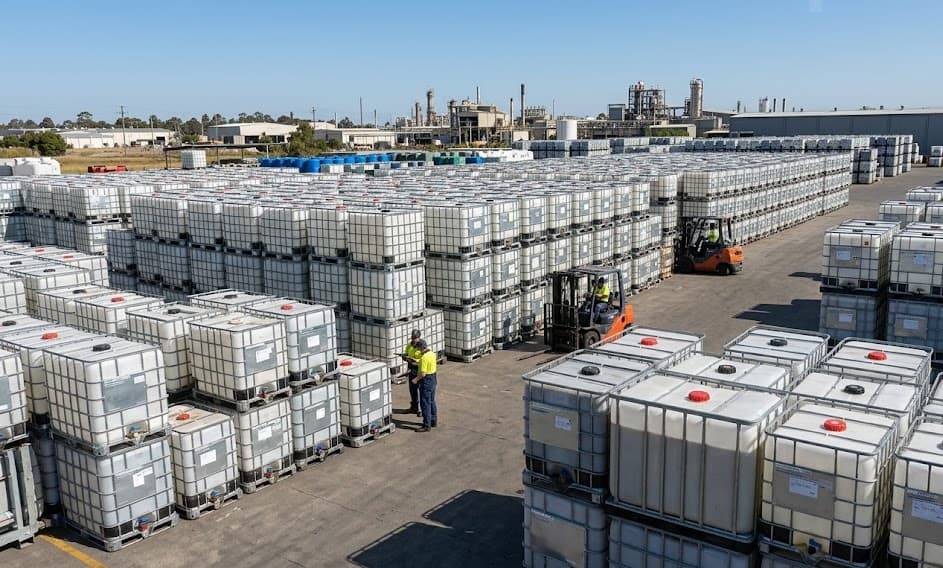
Water storage is one of the most popular applications for IBC totes among homeowners, farmers, preppers, contractors, and off-grid enthusiasts. A single 275-gallon tote provides more storage capacity than four standard 55-gallon rain barrels combined, at a fraction of the cost per gallon. Whether you are collecting rainwater for garden irrigation, maintaining an emergency drinking water reserve, or supplying water to a remote job site, IBC totes offer a practical and affordable solution. Here is how to set up a reliable water storage system using IBC totes.
Choosing the Right Tote for Water Storage. The first and most important decision is selecting a tote with an appropriate history. For potable (drinking) water storage, you must use a food-grade IBC tote that has only ever contained food-safe materials. Common acceptable prior contents include vegetable oil, fruit juice, glycerin, and food-grade alcohols. Do not use a tote that previously held industrial chemicals, solvents, pesticides, or non-food products, regardless of how well it has been cleaned. The semi-porous nature of HDPE means that chemical residues can migrate from the plastic into your stored water. For non-potable applications like garden irrigation, livestock watering, or construction site water supply, the previous-contents requirement is less strict, but you should still avoid totes that held toxic or hazardous materials.
Grade selection depends on your budget and aesthetic preferences. Grade A totes are cleaner and more visually appealing but cost more. Grade B and C totes work perfectly well for water storage from a functional standpoint — staining and cosmetic imperfections do not affect the container's ability to hold water safely. For a system that will be visible to neighbors or customers, Grade A is worth the premium. For a utility system tucked behind a building or in a basement, Grade C is fine.
Site Preparation. Choose a level, stable location for your IBC tote. A full 275-gallon tote weighs approximately 2,300 pounds — more than a ton — so the surface must be able to support this weight without settling or shifting. Concrete pads, compacted gravel, and paver stone bases all work well. Avoid placing totes directly on bare soil, which can settle unevenly and rot wooden pallets. If you are elevating the tote for gravity-fed distribution, the platform must be engineered to handle the full weight safely. A tote elevated on cinder blocks, for example, requires enough blocks to distribute the load and prevent point loading that could crack the blocks.
UV Protection. Sunlight degrades HDPE plastic over time and promotes algae growth inside the tote. If your tote will be stored outdoors, protect it from direct sunlight. Options include placing it under a roof overhang, building a simple shade structure, wrapping it in a UV-resistant cover, or painting the exterior with UV-reflective paint. Some DIYers wrap the cage and bottle in opaque material (such as heavy-duty tarps or reflective insulation) to block both UV radiation and light penetration that feeds algae.
Plumbing and Connections. The standard 2-inch butterfly or ball valve at the bottom of the tote is your primary dispensing point. For garden irrigation, you can connect a standard garden hose adapter (2-inch valve to garden hose thread adapter) and run a hose directly to your garden beds or irrigation system. For higher-flow applications, connect a pump to the valve outlet. A small 12V or 120V utility pump can pressurize the water for sprinklers, pressure washers, or household-like water pressure at remote locations.
For rainwater collection, connect your roof downspout to the top opening of the tote using a downspout diverter or first-flush diverter. A first-flush diverter is particularly recommended — it diverts the first few gallons of roof runoff (which contain the most dirt, bird droppings, and debris) away from the tote, allowing only cleaner water to enter. Install a fine mesh screen or filter at the tote's inlet to keep leaves, insects, and debris out of the stored water.
For systems with multiple totes, connect them in series by plumbing the overflow outlet of one tote to the inlet of the next. This way, when the first tote fills to capacity, excess water flows automatically to the next tote in line. Use the bottom valve of the last tote in the series as your primary dispensing point, and the system will drain sequentially.
Water Treatment. For potable water storage, treat the water before or after storing it. Municipal tap water is already treated and can be stored in a clean, food-grade tote as-is for up to six months before it should be rotated. For longer-term storage, add a small amount of unscented household bleach (sodium hypochlorite) at a rate of 1/8 teaspoon per gallon, or approximately 2 tablespoons per 275-gallon tote. This maintains a residual chlorine level that prevents microbial growth. Alternatively, use commercial water preservation products designed for long-term storage.
Rainwater and well water should be treated before drinking. Options include filtration systems (activated carbon, ceramic, or UV filters), chemical treatment (chlorination or iodination), and boiling. For non-potable uses like irrigation and toilet flushing, rainwater from a reasonably clean roof can be used without treatment, though filtering out debris improves system performance and reduces maintenance.
Winter Considerations. In Northeast Ohio, freezing is a serious concern for outdoor water storage. Water expands approximately 9 percent when it freezes, which can crack the HDPE bottle and damage the valve and fittings. For totes that will remain full during winter, install an IBC heating blanket to maintain the water temperature above freezing. For totes used only during the warm season, drain them completely before the first hard freeze and store them empty through winter. If the tote cannot be fully drained, leave the valve open so that any ice expansion has room to move rather than building pressure inside the sealed container.
Maintenance. Inspect your water storage totes at least twice a year. Check the valve for leaks, the bottle for cracks or UV damage, and the cage for rust or structural issues. Clean the interior annually by draining the tote, scrubbing the walls with a brush and a mild bleach solution, rinsing thoroughly, and refilling with fresh water. For rainwater systems, clean the inlet filter and first-flush diverter seasonally, and remove any sediment that has accumulated at the bottom of the tote.
Cleveland IBC Recycling carries food-grade reconditioned IBC totes that are ideal for water storage applications. We can advise you on the right tote for your specific water storage needs and supply the adapters, fittings, and accessories to complete your system. Stop by our facility or give us a call to discuss your project.