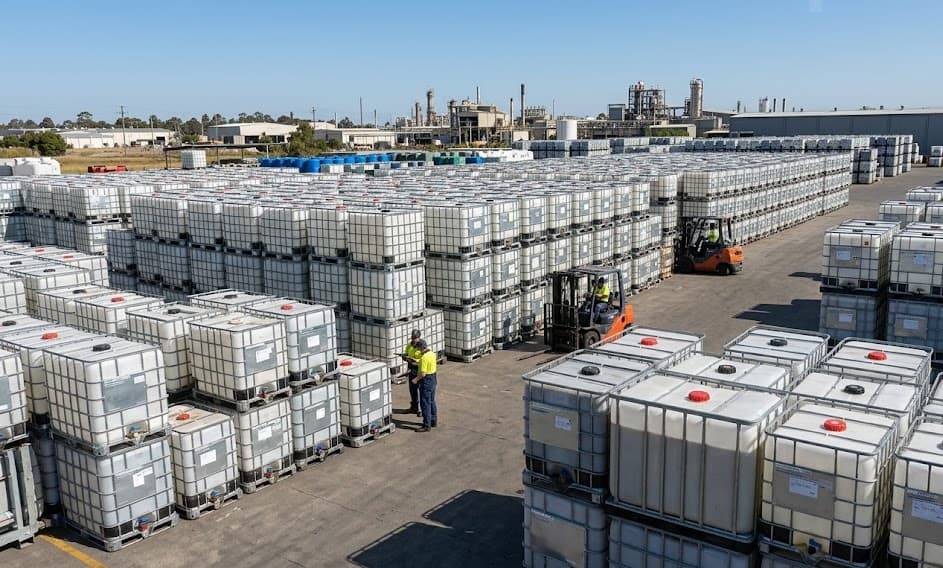
The circular economy is a framework for rethinking how we produce, use, and dispose of goods, and the IBC tote industry is one of its most practical real-world demonstrations. Unlike the linear economy model — where materials are extracted, manufactured into products, used once, and discarded — the circular economy keeps materials and products in use for as long as possible, extracting maximum value at every stage before eventually recovering and regenerating the raw materials. IBC totes cycle through multiple phases of productive use, and understanding this cycle reveals why they are among the most sustainable industrial containers available.
The lifecycle of an IBC tote in a circular economy begins at manufacture. A new composite IBC tote consists of three primary components: a high-density polyethylene inner bottle, a galvanized steel cage, and a pallet base made of wood, steel, or plastic. These materials are selected for durability, chemical resistance, and structural strength — qualities that enable the container to serve multiple use cycles rather than being designed for single use and disposal.
Phase one is first use. A new IBC tote is filled with a product — say, vegetable oil — and shipped from a food manufacturer to a distributor. The distributor empties the tote and, rather than discarding it, returns it to a reconditioner or sells it on the secondary market. This first return marks the beginning of the tote's circular journey.
Phase two is reconditioning. At a facility like Cleveland IBC Recycling, the returned tote is inspected, cleaned, and restored. The inner bottle is washed through a multi-stage process that removes residual product. The valve and gasket are replaced if needed. The cage is straightened, and any damaged components are repaired or replaced. The pallet base is checked for structural integrity. After reconditioning, the tote is re-certified for its next use and sold to another customer — often at 40 to 60 percent less than the cost of a new container.
Phase three is second use. The reconditioned tote enters service with a new owner, perhaps a chemical manufacturer who fills it with an industrial cleaning solution. When that product is dispensed and the tote is empty again, it returns to the reconditioner for another cycle of cleaning and inspection.
This reconditioning loop can repeat multiple times. A well-maintained IBC tote can serve three to five use cycles before the HDPE inner bottle begins to show signs of aging — such as yellowing, brittleness, or micro-cracking — that make further reconditioning impractical. The steel cage and pallet base often last even longer than the bottle, so a common practice is to "rebottle" the tote by replacing the inner bottle while retaining the cage and pallet. This extends the life of the assembly and keeps more material in circulation.
Eventually, every IBC tote reaches true end of life. The bottle is too degraded to recondition, the cage is too damaged to repair, or the design is too old to meet current standards. At this point, the circular economy does not call for disposal — it calls for material recovery. The HDPE bottle is shredded, washed, and pelletized into recycled HDPE resin that feeds back into the plastic manufacturing supply chain. It may become drainage pipe, plastic lumber, automotive parts, or even new IBC bottles depending on the quality of the recycled resin. The steel cage goes to a metal recycler where it is melted and recast into new steel products. Wooden pallets are chipped for landscape mulch or biomass energy. Plastic pallets are recycled alongside the bottle material.
The result is a system where virtually no material from an IBC tote reaches a landfill. The initial investment of energy and raw materials that went into manufacturing the tote is spread across multiple use cycles and eventually recovered through recycling. Compared to single-use containers — such as one-way drums, cardboard IBC systems, or flexible bags that go to landfill after one use — the circular IBC model generates dramatically less waste per gallon of product handled over its lifetime.
The economic incentives align with the environmental ones. Buying reconditioned totes costs less than buying new. Selling your empty totes to a reconditioner generates revenue or offsets disposal costs. Recycling end-of-life totes recovers material value from components that would otherwise be a waste disposal expense. Every participant in the circular chain — manufacturer, first user, reconditioner, second user, recycler — captures value, and the system sustains itself without external subsidization.
For businesses evaluating their environmental impact, participating in the IBC circular economy is one of the most tangible and measurable steps available. Every tote that gets reconditioned instead of scrapped avoids the carbon emissions of manufacturing a replacement. Every tote that gets recycled instead of landfilled keeps plastic and metal out of disposal sites. And every purchase of a reconditioned tote over a new one reduces demand for virgin material extraction.
Cleveland IBC Recycling operates at the center of this circular system in Northeast Ohio. We buy used totes from businesses across the region, recondition them to rigorous standards, sell them to the next user, and responsibly recycle those that have reached end of life. If your business generates empty IBC totes, buying them back keeps the circle turning. If you need totes for your operations, buying reconditioned puts the circle to work for you.